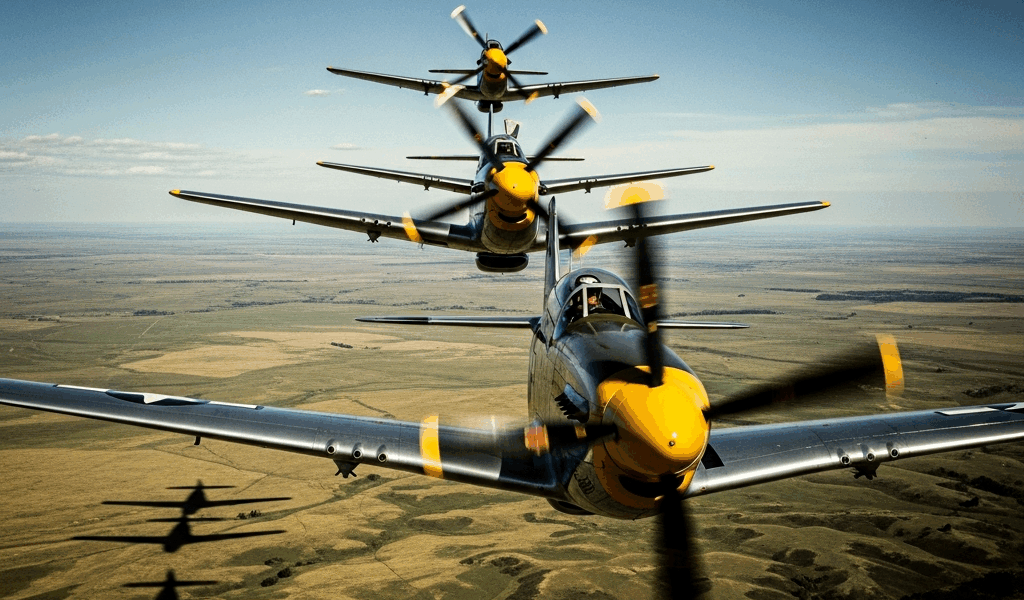
Why Warbird Formations Are Getting Harder to Find
Warbird formation flying has gotten complicated with all the noise flying around about which shows still actually deliver. I’ve been chasing these events for over a decade now, and I
The short answer to “what airshows still feature warbird formations in 2025” is: fewer than last year. True multi-ship warbird formation flying has quietly become a niche attraction — at least if you’re measuring by North American and European venues combined. Insurance underwriters tightened formation flying requirements somewhere around 2018 and never loosened them. Pilot availability collapsed as experienced formation leads aged out. Fuel and maintenance on seventy-year-old airframes costs real money. A single P-51 Mustang flying in formation runs roughly $3,000 per flight hour — before pilot fees. Show organizers make hard choices.
Static displays and solo demo flights now dominate the warbird segment at most venues. Worth seeing? Sure. But watching four Corsairs lock into fingertip formation three hundred feet above the runway is something else entirely. The difference between a solo taxi pass and a six-ship echelon is the difference between a museum visit and an airshow. So, without further ado, let’s dive in.
This article includes affiliate links. We may earn a commission at no extra cost to you.
Shows That Still Deliver Real Warbird Formation Flying
EAA AirVenture Oshkosh — Wisconsin
Oshkosh remains the most consistent venue for warbird formations. The sheer concentration of vintage aircraft owners in one place gives organizers real options — not just hope. You’ll see four to six T-6 Texans in formation nearly every year, usually flown by CAF pilots. Some years bring P-51 Mustang formations, typically two to four ship. Friday and Saturday flying schedules are where warbirds cluster. Monday is hit-or-miss as fuel and maintenance demands take their toll by then.
I drove sixteen hours to Oshkosh in 2022 expecting P-51s. Found them grounded. Don’t make my mistake — check the schedule closer to late July, not three months out.
Planes of Fame Air Show — Chino, California
Located at Chino Airport, this May event is arguably the strongest pure warbird formation show still running. The museum operates multiple flyable warbirds itself, which means continuity that volunteer-dependent shows can’t match. Expect three to five T-6 formations, occasional P-51 multi-ship passes, and sometimes — depending on restoration schedules — a rare four-ship T-28 Trojan formation. California May weather can ground formations on short notice. Winds along the inland corridor are genuinely unpredictable. Budget a two-day trip if you can.
Thunder Over Michigan — Battle Creek
This September show, run by the Kalamazoo Aviation History Museum, consistently books strong warbird lineups. Four to six aircraft in tight formation flying is standard here. Usually T-6s and Texans, with occasional WWII single-engine fighters mixed in. The venue sits on a former bomber base — that context matters. The show has kept formation flying as a centerpiece rather than a nice-to-have filler act, and that commitment shows in the programming year over year.
Flying Legends of Duxford — United Kingdom
Duxford sits near Cambridge. The September event there hosts one of Europe’s premier warbird gatherings — Spitfire multi-ships, Mustangs, and sometimes six or more vintage trainers in tight echelon. The flying field is enormous, giving formation pilots room to actually work without the tight constraints smaller American venues impose. Airfare and logistics eat into the budget hard. But the formation quality is consistently exceptional. Duxford maintains its own flight-ready collection, so aircraft availability is higher than at shows depending entirely on whoever volunteers their aircraft that weekend.
Commemorative Air Force Airshows — Multiple Locations
The CAF runs regional airshows throughout Texas, Arizona, and several other states. These don’t get advertised as heavily as major events — which is honestly a shame. Their own squadron aircraft fly regularly, and CAF pilots are formation-certified. Shows in Midland, Texas and Mesa, Arizona typically book two to four ship formations as standard programming. Smaller events mean less fanfare but genuinely better sightlines. I’m apparently a sightline person and the CAF regional format works for me while massive stadium-style shows never quite do.
Probably should have opened with this section, honestly — but EAA AirVenture in Oshkosh and Planes of Fame in Chino are your safest bets.
If you’re picking one show specifically for warbird formations, those two have the deepest resources and most reliable lineups. Neither is guaranteed flawless — I’ve seen cancellations at both — but they book with intention rather than luck.
What Makes a Warbird Formation Worth Watching
But what is a fingertip formation? In essence, it’s aircraft flying just ten to twenty feet wingtip to wingtip. But it’s much more than that — it’s pilots making constant micro-adjustments, trusting each other completely, flying coordinated stick-and-rudder work for minutes at a stretch. An echelon puts planes in a diagonal line, which was common WWII tactical flying. A loose parade pass is just that. Loose. Same direction, wide separation, no tight choreography.
Missing man formation deserves its own note. Four aircraft fly in diamond, then one pulls up and away. It honors fallen pilots. It’s deliberate, powerful theater — and it requires four experienced pilots working as a single unit.
Tight formations are harder to fly, riskier, and more impressive. Look for them specifically in schedule notes. Shows promoting “missing man” or “fingertip formation” are committing to that level of flying explicitly — not just filling a time slot.
How to Find Out What a Show Is Actually Flying This Year
Websites lie. Schedule PDFs go stale. Your best move is following performer social media accounts three to four weeks before the show. CAF squadrons post updates constantly. Vintage aircraft owners announce fly-ins inside Facebook groups like “Vintage Aircraft Owners and Pilots.” Check the show’s official website for formation flying specifically — not just “warbird performers” listed generically.
Email the show organizer’s office directly if the website is vague. Ask this exact question: “Are you booking warbird formation flying this year, and if so, which aircraft?” You’ll get honest answers. Organizers actually appreciate specific questions over generic inquiries.
Also worth doing — pull formation flying clips from previous years of the show on YouTube. If formations ran in 2023 and again in 2024, they’re likely planned for 2025 barring major scheduling shifts. That was true for Thunder Over Michigan three years running.
Shows on the Watch List for 2026
Several smaller venues are ramping up warbird programming right now. The EAA’s regional events are testing expanded formation flying slots. One Texas-based warbird operation is negotiating with three shows for dedicated formation slots starting next year — nothing confirmed as of this writing, but the conversations are active. Keep an eye on CAF announcements in Q4 of 2025. They typically reveal next year’s show commitments by November, sometimes earlier.
For tracking formation flying at altitude, a good pair of binoculars makes the difference between watching dots and actually seeing the aircraft hold position. The Nikon Monarch M5 8×42 delivers sharp edge-to-edge clarity without the weight penalty that makes heavier optics miserable during a full day on the flight line.
Warbird formations aren’t extinct. They’re concentrated now — harder to find, but absolutely still there. Hit the right show and you’ll see flying that most people genuinely never get to experience.

Stay in the loop
Get the latest airshow spectacle updates delivered to your inbox.