“`html
Why Some Airshows Cancel Aerial Demonstrations Last Minute
I’ve driven four hours to an airshow exactly twice. Both times, I arrived at 7 a.m., parked in a muddy field, and watched the announcer apologize for cancelling the aerial demonstrations by 10:30 a.m. The first time, I assumed bad weather. The second time, I got angry because the sky looked perfectly clear. That frustration got me obsessing over airshow operations, military scheduling, and insurance protocols — what I found explains why some airshows cancel aerial demonstrations far better than any generic weather forecast.
Airshow cancellations have gotten complicated with all the excuses flying around. Yes, weather cancels flights. But weather is often the public-facing explanation for operational and safety decisions that started days or weeks earlier. The actual reasons? They’re messier than “it’s windy.”
The Three Categories of Last-Minute Cancellations
Not all cancellations are created equal. Conflating them misses the point entirely.
True Weather Holds
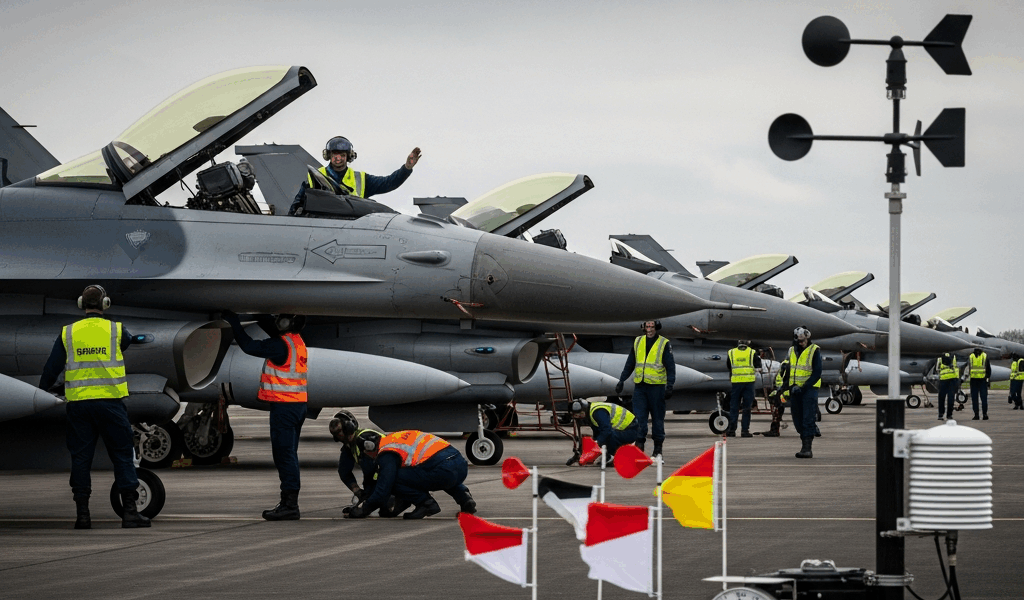
Actual weather cancellations happen, obviously. But they’re more specific than “it’s cloudy.” We’re talking about crosswind limits — typically 12 to 15 knots for most aerobatic aircraft — cloud ceiling minimums around 1,500 feet for formation flying, and visibility thresholds usually set at 3 miles. A C-130 Hercules operates in conditions that would absolutely cancel an F-16 demonstration. That’s why you might see transport planes flying while fighter jets stay grounded.
The 72-hour forecast matters because weather systems move. I learned this by obsessively checking NOAA forecasts before my third airshow attempt. What looked marginal on Friday could genuinely be unsafe by Sunday morning. That’s the window when organizers actually make the call.
Operational Scheduling Conflicts
This is the category that frustrated me most — because it has nothing to do with weather. Military aircraft commitments change. A unit scheduled for a Saturday airshow might receive orders for a training deployment, a TDY assignment, or an emergency tasking that overrides the civilian airshow commitment. The airshow is secondary. Always.
Probably should have opened with this section, honestly. This is why some airshows announce cancellations the morning of the event. The military hasn’t withheld information. They genuinely didn’t know until morning briefing that the F-15 demonstration had been redirected to a training mission.
Safety Protocol Holds
These differ from weather calls entirely. An aircraft might be airworthy, conditions might be marginal but technically acceptable, but the air boss or pilot invokes a safety hold anyway. Maybe there’s a maintenance discrepancy on a crucial system. Maybe runway conditions deteriorated overnight. Maybe an aircraft had a minor hydraulic anomaly during a previous flight that maintenance needs 90 more minutes to verify. The safety threshold isn’t “theoretically safe” — it’s “we’re 100% confident it’s safe.”
Military Aircraft Scheduling Conflicts Nobody Talks About
An air tasking order issued three days prior could reassign an F-16 squadron commander to a competing commitment that supersedes an airshow contract entirely.
Here’s what most attendees don’t understand: military participation at civilian airshows operates under a specific framework. It’s not a paid gig. It’s a public affairs mission that units volunteer for based on available aircraft and pilot availability. Those conditions change constantly.
Deployment cycles matter. A unit scheduled for a September airshow might receive notification in July that their deployment window is shifting to August. The aircraft and pilots needed for the airshow are now committed to overseas operations. By the time airshow organizers learn this, they’re six weeks out — enough notice to find a replacement, maybe, but probably not.
Maintenance windows create the same issue. Aircraft operate on strict inspection schedules. A major overhaul might rotate a key performer out of the flying schedule for three months. If that overhaul timing shifts, the available aircraft roster changes. Someone involved in airshow logistics mentioned that aircraft tasking sometimes gets finalized only 30 days before an event. That’s cutting it dangerously close.
Base closures and installation inspections also trigger cancellations. When higher command schedules an operational readiness inspection, every aircraft on that base becomes potentially unavailable. The airshow doesn’t rank above that inspection. Not even close.
The uncomfortable truth: civilian airshow organizers have limited leverage. They can’t demand military participation. They can request it, plan for it, announce it — and then watch it evaporate when operational needs change. That’s just how it works.
The Air Boss Decision Point and Safety Holds
The actual moment of cancellation often happens during the final safety briefing. This is where I lacked clarity until I researched how airshow operations actually work.
The air boss — the person with ultimate authority over what flies — reviews current weather data, runway conditions, aircraft status reports, and pilot assessments. They’re not making a decision based on the current wind speed. They’re checking whether conditions match the parameters established during rehearsal and risk assessment meetings that happened weeks earlier.
A crosswind of 11 knots? Fine. 13 knots? Marginal but within limits. 13 knots with runway surface moisture from overnight dew? That combination might exceed the safety margin. Crosswind limits exist for a reason — aircraft stability and pilot control authority. The air boss doesn’t guess. If conditions approach those limits, the demonstration gets postponed.
Runway conditions represent another critical factor. Military bases and airshow venues use different surface preparations. A runway might be perfectly acceptable for transport operations but inadequate for aerobatic sequences requiring precise centerline tracking during aggressive maneuvers. Moisture, patching, foreign object debris — these factors matter more than general weather descriptions suggest.
Aircraft mechanical readiness also drives last-minute decisions. A pilot might complete a pre-flight and discover a flight control anomaly, a hydraulic indication that seems off, or an engine parameter sitting slightly outside normal range. Probably nothing serious. But probably isn’t good enough for an aerobatic flight over a crowd. The aircraft stays parked.
I missed the whole operational aspect during my first two cancelled airshow attempts. I thought the air boss was being overly cautious. After learning how narrow the safety margins actually are, I realized he was being appropriately cautious. Don’t make my mistake.
How Airshow Insurance and Weather Waivers Actually Work
Airshow liability insurance creates financial pressure toward cancellation in marginal conditions — and it’s substantial.
Most airshow insurance policies include specific weather exclusions. If conditions fall outside established parameters — wind speed, visibility, ceiling — the insurance doesn’t cover accidents or incidents. This leaves the airshow organizer carrying uninsured risk. A $200,000 insurance policy might exclude weather-related incidents entirely, leaving the organizer personally liable for potentially millions in damages.
Weather waivers exist, but they’re expensive and controversial. An organizer can purchase coverage for marginal conditions, but the premium increases dramatically. For smaller airshows operating on thin margins, that extra $5,000 or $10,000 in insurance cost might not be feasible. They simply can’t absorb it.
Here’s what most people don’t realize: the liability isn’t just for catastrophic accidents. A spectator injured during evacuation due to dangerous conditions, a pilot forced to make an emergency landing that damages equipment, even weather-related vehicle incidents in the parking area — all potentially covered situations that insurers specifically exclude when conditions violate policy limits.
Organizers operate under contract liability as well. If they promised military aircraft demonstrations in their promotional materials and those demonstrations don’t occur due to weather or operational conflicts, spectators have ground for complaint. Some states have consumer protection laws that could apply. Rather than risk that exposure, organizers cancel when conditions are marginal or when military commitments fall through.
What Attendees Should Know Before Buying Tickets
Knowing the reasons for cancellations helps predict which airshows are more reliable and when to expect issues.
Airshow Type Matters
Civil-only airshows with primarily civilian aerobatic teams have lower cancellation rates than events heavily dependent on military participation. Military aircraft operate under scheduling pressure that civilian performers don’t face. Want maximum reliability? Look for events featuring Blue Angels-type teams that are permanently assigned to airshow duties, or established civilian aerobatic groups like the Red Baron Squadron.
72-Hour Forecast Checking
Weather cancellations become clearer about three days out. Check Friday morning for a Sunday show. Look specifically for sustained wind forecasts, not just gusts. Gust events are temporary. Sustained 16-knot winds are the real problem. Cloud ceiling and visibility forecasts matter less than wind data for cancellation prediction — wind is what actually grounds aircraft.
Refund and Reschedule Policies
Before buying tickets, read the cancellation policy explicitly. Most major airshows offer rain dates or refunds for cancelled aerial demonstrations specifically. Some restrict refunds to full-show cancellations, not partial cancellations. The Fort Lauderdale Air Show and the EAA AirVenture Oshkosh both have clear reschedule policies; smaller events might not offer anything.
Military participation announcements within 30 days of an event carry higher cancellation risk. If an airshow adds military aircraft to their lineup late, there’s elevated operational uncertainty. You’ve been warned.
Last-minute cancellations aren’t always avoidable — weather systems intensify, maintenance issues surface, military priorities shift. But they’re rarely random. Understanding the safety protocols, insurance constraints, and operational realities behind those cancellations transforms frustration into something closer to acceptance. I’ll still drive to airshows. I’ll just bring a book and lower expectations until the aerial demonstrations actually commence.
“`n


Stay in the loop
Get the latest airshow spectacle updates delivered to your inbox.