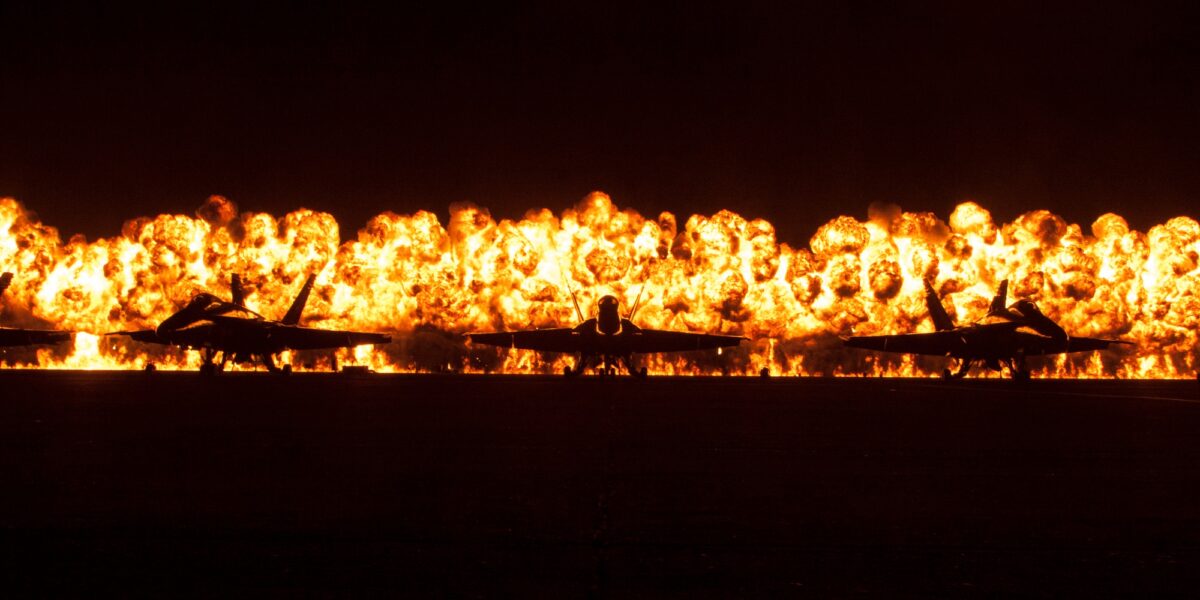
A night air show combines aerobatic flying with illuminated aircraft, airborne or ground pyrotechnics, fireworks, lasers, drones and music. It is not simply a daytime routine performed after sunset: pilots fly against a darker horizon, organizers establish a lighted show line, and every effect must fit a tightly controlled safety plan.
What happens at a night air show?
A typical program starts near twilight, when conventional aircraft can still be seen clearly, and becomes more light-focused as the sky darkens. The exact sequence varies, but spectators may see several of these elements:
| Show element | What spectators see | Important distinction |
|---|---|---|
| Illuminated aerobatics | LED-outlined aircraft, smoke and graceful loops or rolls | The routine is designed for that aircraft and approved pilot |
| Airborne pyrotechnics | Sparks or fireworks deployed from an aircraft in flight | These are controlled effects, not ordinary consumer fireworks |
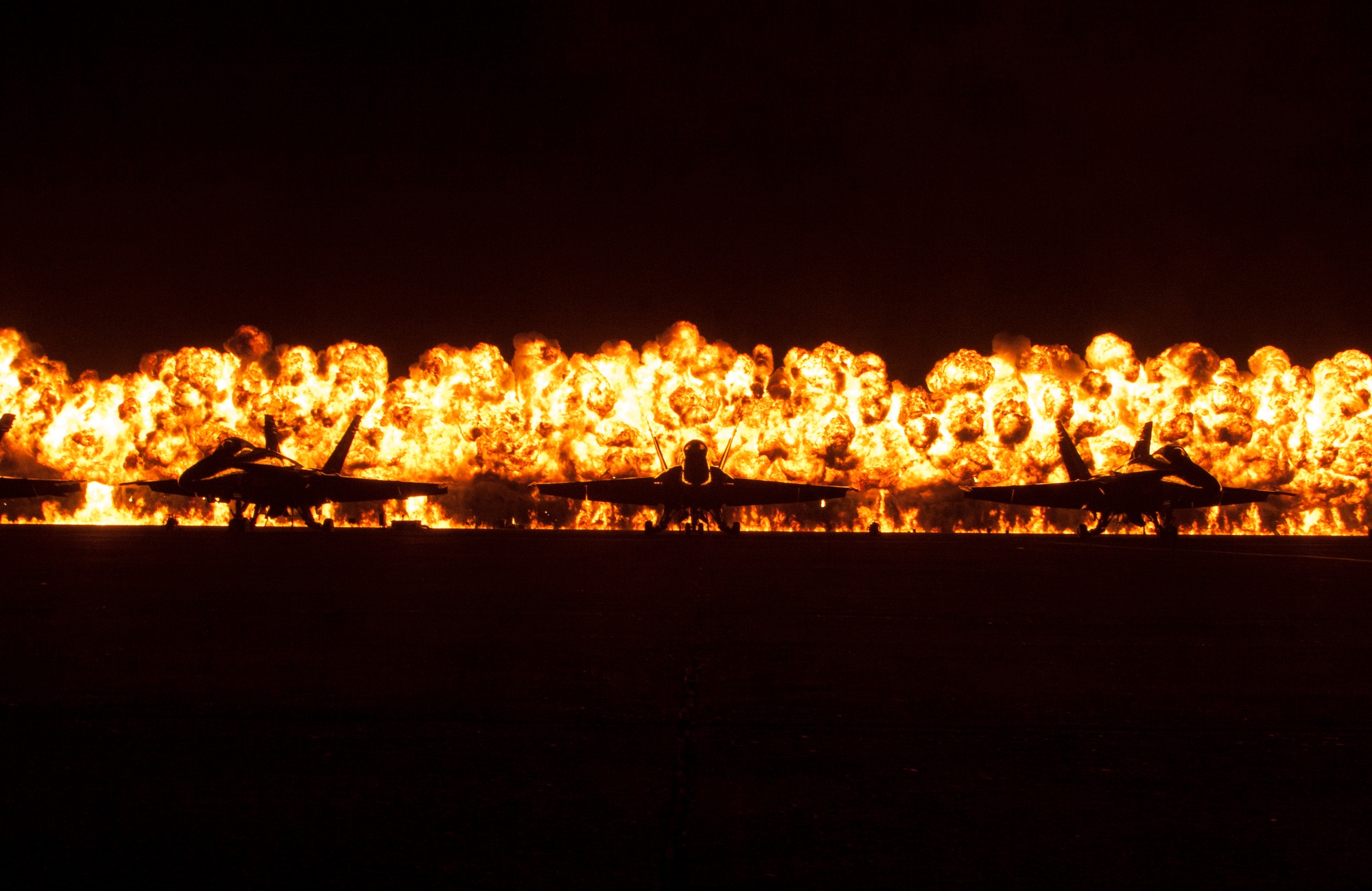
| Ground pyrotechnics | Simulated bomb bursts, fireballs or a “wall of fire” | Effects are placed inside a mapped, protected area |
| Night parachuting | Illuminated canopies, smoke or lights descending toward show center | Weather and landing-area visibility are critical |
| Drone or laser segment | Coordinated shapes, animation and color set to music | A drone show is a separate operation from aerobatic flight |
| Fireworks finale | A conventional aerial fireworks display after flying ends | Not every night show includes aircraft-mounted pyro |
“Twilight show,” “night air show,” “pyromusical” and “after-dark show” are sometimes used interchangeably in event marketing, but they can describe different programs. Read the official daily schedule to learn whether a ticket includes a full flying display, a composite day-to-night program, or only evening entertainment.
Where can you see a night air show?
EAA AirVenture Oshkosh
EAA’s official 2026 program scheduled night air shows at 8 p.m. on Wednesday and Saturday. EAA describes the evening presentation as a mix of aerobatic aircraft, modified wingtips that deploy fireworks and other illuminated effects. Admission also included the night shows and Twilight Flight Fest, according to EAA’s ticket information.
Use the official EAA air-show page for the current year’s times and performers. Our AirVenture Oshkosh guide covers the broader event, verified attendance and planning context.
SUN ’n FUN Aerospace Expo
SUN ’n FUN’s official 2026 schedule demonstrates how much a night program can contain. Its Wednesday composite show moved from daylight through twilight into a pyromusical with aircraft, wingsuits, drones, pyrotechnics, fireworks and lasers. Saturday had a separate 7–9:15 p.m. night air show and pyromusical.
Check the official SUN ’n FUN air-show schedule for current details. The lineup is revised annually, so an old performer list should never be treated as confirmation for a future show.
Regional twilight and military shows
Some regional events add a Friday-evening twilight program before their main weekend show. These may combine a smaller number of performers with fireworks, music or a drone finale. Military installations sometimes stage after-dark portions too, but access, parking and permitted items can differ from a civilian fly-in. Search the host event’s official page for “night show,” “twilight,” “after dark,” “pyro” or “Friday preview.”
Our 2026 air show schedule is a starting point for finding events; always follow its official organizer links before buying tickets or traveling.
How are night air shows kept safe?
In the United States, an aviation event requires an FAA Certificate of Waiver or Authorization. The FAA’s National Aviation Events Program publishes special provisions for night flying and pyrotechnics, along with planning and briefing resources.
The FAA’s example night airborne pyrotechnic provisions define night as beginning after evening civil twilight. They call for a well-defined, lighted show line; confine aerobatic demonstrations to a specified altitude band; establish minimum cloud and visibility conditions; and prohibit operations over people while pyrotechnics are illuminated. The exact authorization for a particular event is issued for that site and program.
Ground effects require their own mapped locations, public-protection procedures and fire-response planning. That is why spectators must stay behind crowd lines even when a seemingly empty patch of ground offers a better view. For hearing protection, hydration, children and weather planning, use our airshow safety guide for families.
Planning your visit
- Confirm the correct day. A multi-day event may stage the night show only once or twice.
- Check whether it needs a separate ticket. Evening admission, reserved seating and parking rules vary by organizer.
- Arrive before sunset. Parking, security and finding a safe viewing position are harder in darkness.
- Bring hearing protection. Night does not make jet noise or explosive effects quieter.
- Pack a small flashlight. Use it pointed toward the ground, and avoid ruining other spectators’ dark adaptation.
- Prepare for a temperature drop. Even hot airfields can cool quickly after sunset.
- Recheck weather and social updates. Low clouds, visibility, wind or lightning can alter the sequence shortly before show time.
- Plan the exit. A fireworks finale can send much of the crowd toward parking at once.
Do not bring a laser pointer, launch a personal drone, cross barriers or use flash photography toward performers. Follow the event’s bag, chair, tripod and prohibited-items rules rather than relying on another airshow’s policy.
How to photograph a night air show
Night aviation photography is a tradeoff between shutter speed, motion and noise. Begin with shutter-priority or manual exposure, continuous autofocus and RAW capture. A wider aperture and a high but manageable ISO help preserve a shutter speed fast enough for aircraft movement. Review highlights after the first pyro pass because flames and fireworks can clip even when the aircraft looks dark.
- For moving aircraft, start around 1/250 to 1/500 second and adjust for speed and focal length.
- For propeller aircraft, experiment with slower shutter speeds once you have a sharp safety sequence.
- Use exposure compensation or manual settings so a black sky does not fool the meter into overexposure.
- Track the aircraft before pressing the shutter, and leave room in the frame for sparks or smoke.
- Avoid flash; it will not illuminate a distant aircraft and can distract nearby spectators.
Our airshow photography guide explains panning, lenses and daytime setup. Practice those tracking skills before the sky goes dark.
Night air show FAQ
Are night air shows safe for children?
They can be family-friendly, but the combination of darkness, crowds, loud aircraft and explosive effects needs preparation. Bring properly fitted hearing protection, establish a meeting plan, and confirm whether the event permits strollers or wagons.
Do the Blue Angels or Thunderbirds fly at night?
Their standard demonstration profiles are daytime performances. A night-show program may include other illuminated aerobatic performers, and military aircraft may appear in a twilight segment while sufficient light remains. Check the official schedule rather than assuming the headlining jet team performs after dark.
Is every night air show a fireworks show?
No. Some programs focus on LED-lit aircraft, parachutists, drones or lasers. Others end with conventional fireworks, while a smaller number include aircraft-mounted or coordinated ground pyrotechnics.
Can a night air show be cancelled for clouds?
Yes. Visibility, cloud base, wind, lightning and precipitation can change or cancel individual acts or the entire program. Night demonstrations operate under defined weather and authorization requirements.
Bottom line: Choose a night air show from the organizer’s current program, arrive before sunset, protect your hearing and expect a deliberately choreographed combination of flight and light—not merely a daytime airshow in the dark.
Columbus debuted a twilight-and-pyrotechnics format in 2026. See the completed schedule and confirmed next-event dates in our Columbus Air Show guide.




Stay in the loop
Get the latest airshow spectacle updates delivered to your inbox.