The Blue Angels versus Thunderbirds debate has gotten complicated with all the strong opinions flying around from fans of both teams. As someone who has watched both squads perform more times than I can count — at beach shows, inland bases, and everything in between — I learned everything there is to know about what makes each team unique. Today, I will share it all with you.
Both teams sit at the absolute pinnacle of precision flying and thrill millions of spectators every year. They share the mission of showcasing military aviation and inspiring future service members. But they differ in significant ways — aircraft, maneuvers, history, flying philosophy. Let me break it all down so you can decide which performances to chase this season.
The History Goes Back Decades
The Blue Angels are the elder statesmen here, established in 1946 just one year after World War II ended. They were originally formed to keep public interest in naval aviation alive. The team has flown through multiple aircraft types while holding onto traditions that connect today’s pilots with 75-plus years of excellence.
The Thunderbirds came along in 1953, created as the Air Force wanted its own demo team to showcase the emerging jet age. Operating out of Nellis Air Force Base in Nevada, the team has represented Air Force capabilities through the entire transition from straight-wing jets to supersonic fighters.
The Aircraft They Have Flown
The Blue Angels started with the Grumman F6F Hellcat, then worked through the F8F Bearcat, F9F Panther, F11F Tiger, and finally the F/A-18 Hornet in 1986. In 2021, they upgraded to the F/A-18 Super Hornet, giving them enhanced performance and future-proofing the team as legacy Hornets get phased out.
The Thunderbirds began with the straight-wing F-84G Thunderjet, progressed through the F-84F Thunderstreak, F-100 Super Sabre, F-4E Phantom II, T-38 Talon, and have flown the F-16 Fighting Falcon since 1983. The F-16 remains their ride today, and its exceptional maneuverability gives them that distinctive look fans recognize immediately.
The Flying Is Actually Very Different
Probably should have led with this section, honestly. Most casual fans think both teams do basically the same thing. They do not. There are subtle but significant differences in flying philosophy.
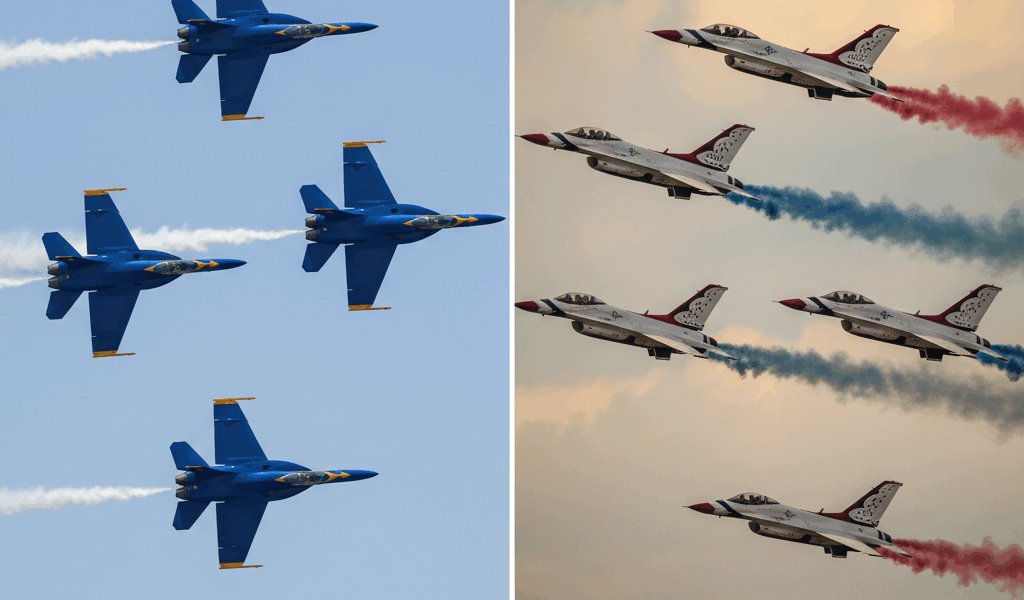
The Blue Angels fly with cockpits overlapping at distances as close as 18 inches. Eighteen inches. Pilots reference specific rivets on adjacent aircraft to maintain spacing. This extreme proximity creates that distinctive “wall of blue” appearance in their diamond formation. It is genuinely terrifying to think about from a physics perspective.
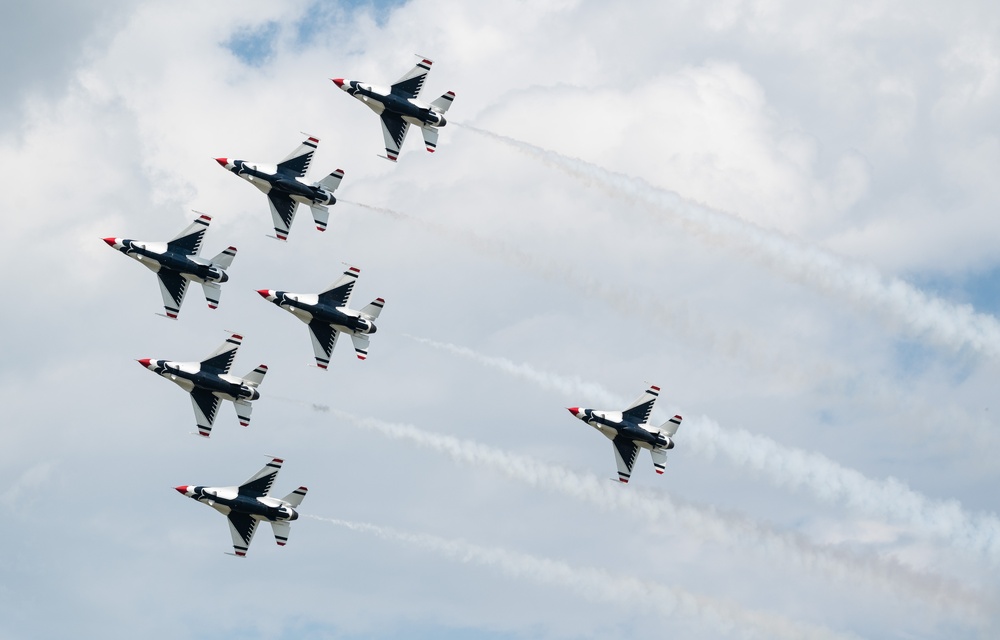
The Thunderbirds maintain slightly more separation, typically 3-4 feet between aircraft. They emphasize precise geometric formations and more aggressive maneuvering. Their diamond roll and bomb burst showcase the F-16’s exceptional roll rate and sustained G capability. Different flavor of impressive.
The Solo Pilots
Both teams feature opposing solo pilots who throw down high-energy maneuvers between formation passes. Blue Angels solos — numbers 5 and 6 — are known for their dramatic sneak passes and knife-edge flight ripping through show center. Thunderbird solos specialize in maximum performance moves that demonstrate the F-16’s raw capabilities, including high-alpha passes and square loops.
The opposing solo sequences build tension through near-miss crossovers that look impossibly close but are carefully choreographed with specific altitude and timing separations. My heart rate spikes every time.
Signature Maneuvers Worth Knowing
Each team has developed signature moves that fans anticipate all year. Knowing what to watch for helps you position yourself for the best views and photos.
Blue Angels Signatures
The Delta formation breakout is their most famous move. All six aircraft fly in delta formation, then simultaneously break in different directions, streaming smoke trails that paint the sky. The low transition with Fat Albert — their C-130 support aircraft — brings that big cargo plane screaming across the field at high speed and absurdly low altitude. Always gets a reaction from the crowd.
The fleur-de-lis has the diamond climbing vertically before each jet peels away in different directions, making a flower pattern. And the opposing knife-edge pass brings the solos screaming toward each other head-on, rolling to knife-edge as they pass at combined closing speeds over 1,000 mph. I have seen grown adults flinch.
Thunderbirds Signatures
The calypso pass is insane. One aircraft flies inverted directly above another, canopies just feet apart, in mirror formation. The diamond roll rotates all four diamond jets 360 degrees while maintaining perfect formation geometry — which should not be physically possible but somehow is.
The bomb burst sends all five aircraft climbing vertically before splitting in different directions, then reuniting moments later in delta. The high-alpha pass demonstrates the F-16’s ability to fly at extreme angles of attack, seemingly hanging motionless in the air. Physics-defying stuff.
Where to See Each Team
Both teams perform roughly 70-80 demonstrations annually across the country and occasionally internationally. Their schedules rarely overlap at the same venue since teams typically alternate at major shows. But the geographic spread means most Americans can see both without epic road trips.
The Blue Angels tend to concentrate along the coasts and Great Lakes, reflecting their naval heritage. Pensacola Beach Airshow and Fleet Week San Francisco are signature Blue Angels venues. If you live near the ocean, you probably have a Blues show within driving distance.
The Thunderbirds hit more inland venues, particularly those near Air Force bases. Nellis open houses let you see them at home, while bases like Joint Base Andrews and Joint Base McGuire-Dix-Lakehurst showcase the team in the mid-Atlantic. If you are in the interior of the country, the T-Birds likely come closer to you.
How Pilots Make the Cut
Both teams select through brutally competitive application processes. Hundreds of applicants compete for a handful of spots each year.
Blue Angels Selection
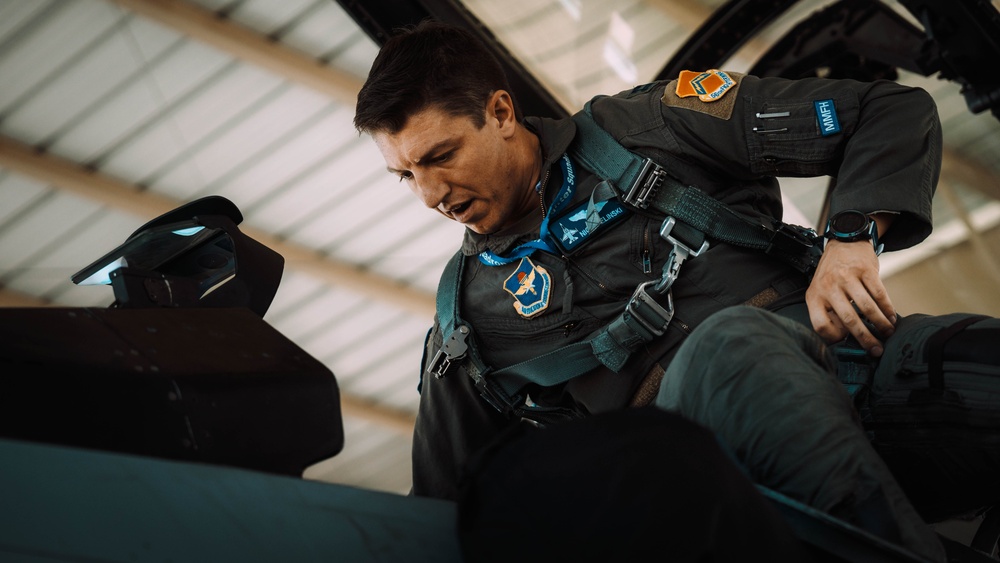
You need to be a Navy or Marine Corps jet aviator with at least 1,250 tactical jet hours. Applicants submit packages reviewed by current team members. Finalists visit the team for interviews and evaluation flights. The team votes, and consensus is required. If someone has reservations, you do not get picked.
New pilots arrive at Sherman Field in Pensacola in October. Months of intensive practice come before the March debut. They build up gradually to the full demo profile.
Thunderbirds Selection
Air Force fighter or fighter-trainer pilots need at least 1,000 hours. The selection process digs deep into leadership potential and communication skills — you are representing the entire Air Force to the public, after all.
New pilots hit Nellis in October for training that starts with two-ship formation and works up to the full six-ship demonstration over the winter months.
So Which Team Should You See?
That’s what makes this debate endearing to us airshow regulars — there is no wrong answer. Both deliver world-class demonstrations that justify whatever travel is required.
If naval aviation heritage speaks to you and you want to see the closest formation flying on the planet, prioritize the Blue Angels. The Super Hornets are bigger and louder than F-16s, creating a more visceral hit during low passes. Fat Albert adds variety you will not get from the Thunderbirds.
If you prefer nimble fighter performance and want to see aircraft pushed to absolute limits, the Thunderbirds emphasize the F-16’s legendary agility. Their solo sequences showcase raw aircraft capability in ways that complement the formation precision.
My real recommendation? See both. At least once each. The differences in aircraft, flying style, and team personality make each demonstration genuinely unique. Many dedicated fans follow both teams annually and still find new details to appreciate every time. I know I do.
Check both teams’ official websites for current schedules. They announce their yearly calendars in late fall, giving you plenty of time to plan a proper airshow season.