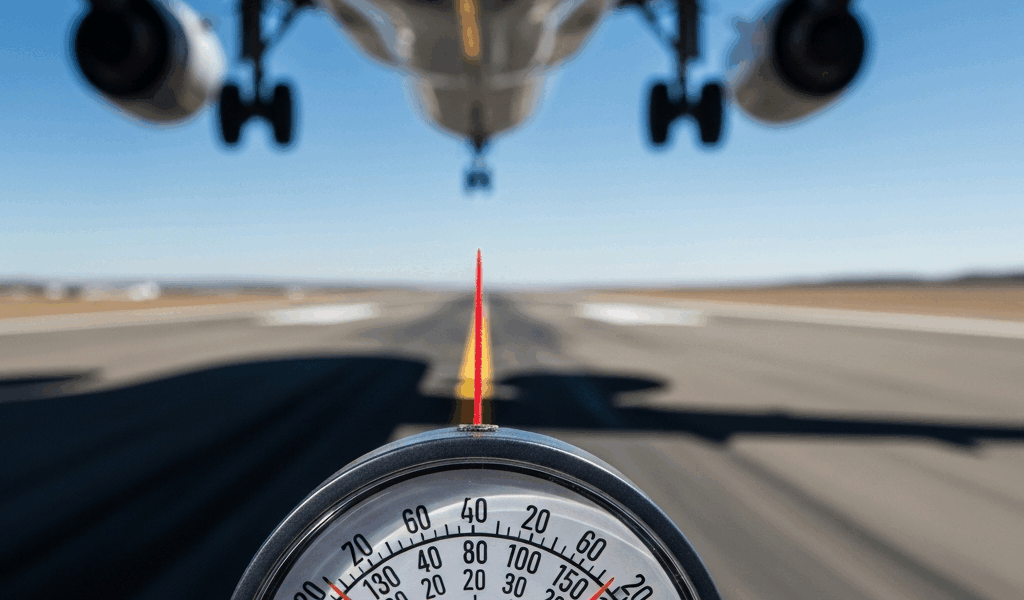
Why Sound Matters More Than You Think at Airshows
I’ve watched thousands of people at airshows miss the money shot. They’re standing in the wrong spot, camera not ready, because they didn’t know what was coming. The announcer’s talking. The crowd’s cheering. Then suddenly a fighter jet appears overhead, and it’s gone in three seconds.
Sound gives you the edge those people don’t have.
Here’s the reality: learning to identify military aircraft by sound at airshows lets you position yourself before the visual even appears. You hear the engine signature — your brain recognizes it as an F-16 — and you’ve got maybe 2-3 seconds to adjust your camera angle, move three steps left, or tell your friend to look up. The announcer’s doing their job, sure, but they’re often narrating something that’s already happened while describing what’s next. By then you’re reacting instead of anticipating.
Experienced airshow attendees don’t watch the sky as much as they listen to it. They’ve internalized the acoustic fingerprint of maybe six to eight common military aircraft. When that distinctive sound hits, they don’t check a guide or squint upward — they’ve already moved.
Probably should have opened with this section, honestly. I spent my first three airshows wondering why the same people always seemed to capture photos of aircraft at the perfect angle while I was fumbling with my telephoto lens. Turns out they were listening.
The Fighter Jet Sound Spectrum You Need to Know
Fighter jets produce wildly different acoustic signatures. Their engines, intake designs, and power settings all matter. Learning these differences? That’s your foundation.
F-16 Fighting Falcon. This is the high-pitched one. An F-16 at cruise power produces a sustained, almost whistling whine that climbs in frequency as it approaches. The sound is relatively thin — not booming — because the F-16 runs a single Pratt & Whitney F100 turbofan. When you hear that needle-like pitch, sharp and persistent, your brain should immediately file it as F-16. The frequency sits around 300-500 Hz on approach. There’s no bass rumble like you’d get from larger engines.
F-15 Strike Eagle. Now you’re hearing twins. The F-15 carries two F100 engines — the same powerplant as the F-16, but doubled — and that creates a deeper, more complex rumble. It’s fuller somehow. Less of a whine, more of a growl. The soundstage is broader because the engines are separated by fuselage width, so you’re actually hearing two sound sources that don’t quite sync perfectly. That slightly uneven quality — that asymmetrical depth — is your tell. An experienced listener can differentiate F-15 from F-16 in about one second of audio.
F-22 Raptor. This one broke my mental model the first time I heard it. The F-22 has a noticeably quieter initial approach than you’d expect from a 35-ton fighter. That’s not an accident — it’s the design. The F-22’s inlets, bypass ratio, and nozzle design create a different acoustic signature entirely. On approach at medium power, it sounds almost muted compared to legacy jets. You might hear a lower-frequency presence that’s almost subsonic-feeling. But once it levels off and increases power, it develops a sharper, more distinctive pitch than the F-15, with a slightly whistling quality underneath.
F-35 Lightning II. The F-35 cuts through the noise differently. It produces a sharper pitch than any legacy fighter jet, with a somewhat higher frequency component that gives it a “cutting” quality in the audio spectrum. Some people describe it as more piercing. That’s partly the engine — Pratt & Whitney F135 — partly the airframe design. If you’re hearing something that sounds like it has an edge to it — almost metallic in the upper frequencies — and it’s faster-sounding than an F-16’s whine, you’re probably tracking an F-35.
The trick with fighters? Sit quietly and listen to the engine noise before the visual shows up. Don’t watch. Just listen. Your ears will start creating categories your brain can recognize without you even trying.
How to Tell Helicopters Apart by Rotor Signature
Helicopters are easier than jets. The rotor blade count and RPM create a repetitive frequency pattern that’s unmistakable once you know what you’re hearing.
AH-64 Apache. The Apache sounds aggressive and fast. Four-blade main rotor running at around 320 RPM creates what people call a “slap” or “chop” sound — rapid, almost angry. The blade passage frequency is distinctive and somewhat high-pitched for a helicopter. When you hear that quick, punchy beating sound, almost like rapid-fire, that’s Apache. The four blades generate four pressure waves per revolution. At Apache RPMs, that’s roughly 21 blade passes per second. Your ear catches that as a rapid, aggressive rhythm.
CH-47 Chinook. Dual rotors. You’re hearing two separate rotor systems, and they’re deliberately timed to create a well-known sound. The Chinook produces that iconic “whomp-whomp-whomp” everyone recognizes — it’s slower, deeper, and more deliberate than the Apache. The dual-rotor configuration creates a more complex acoustic pattern. Because the rotors are counter-rotating, you get this slightly wavering, syncopated quality. The Chinook announces itself unmistakably.
UH-60 Black Hawk. This is your medium-tempo option. Four-bladed rotor, but running at different RPMs than the Apache, producing what people call the classic “whop-whop-whop” of a medium-lift helicopter. It’s steadier than the Apache’s chop but has more rhythm than the Chinook’s whomp. The blade passage frequency sits somewhere between the two — you’re hearing four blade passes per revolution at roughly 290 RPM, which puts you around 19 blade passes per second. It’s the helicopter sound most people associate with medevac or search-and-rescue operations.
Rotor signatures are literally acoustic fingerprints. Once your brain files them, you’ll recognize a Black Hawk from the sound alone, half a mile away.
Afterburner vs. Military Power — What You’re Really Hearing
This is where sound jumps from diagnostic to dramatic.
Military power — maximum non-afterburner thrust — produces a certain baseline rumble. You know the engine’s working hard. The sound has urgency and presence. Then someone lights the afterburner, and the entire acoustic landscape changes. Suddenly it’s not a roar — it’s a scream. The pitch sharpens. The frequency distribution shifts dramatically toward higher frequencies. There’s a knife-edge quality to it, almost a shriek component layered underneath the roar.
Here’s what’s happening: afterburners inject raw fuel into the exhaust stream downstream of the turbine. This creates a different combustion dynamic, higher exhaust velocity, and a completely restructured sound field. The pitch rises. The volume jumps maybe 10-15 decibels. But more importantly, the character changes. Military power sounds like controlled anger. Afterburner sounds like chaos being weaponized.
When you hear that sudden transition — the moment the pitch becomes a shriek — the pilot just lit the burners. That’s your signal that something fast is about to happen. The aircraft is accelerating. The sound will Doppler-shift rapidly as it approaches, peaks, and recedes.
Learning to catch that transition separates the casual airshow attendees from the people who consistently get the dramatic shots.
Practical Positioning Strategy Using Sound Cues
Enough theory. Here’s how to actually use this at an airshow.
Position yourself in an area where you can see your intended camera angle but also hear approaching aircraft clearly. This matters more than you think. Some airshows have viewing areas where sound bounces off structures or gets muffled by terrain. Find a spot with clear audio sightlines.
Wait for the sound. Don’t stare at the sky. Listen. When you hear an engine signature starting to develop — that whine or rumble or rotor chop getting louder — identify it. F-16? F-15? Black Hawk? Give yourself one second to be confident.
Once you’ve identified it, anticipate the flight path. Most airshows follow predictable patterns. The aircraft will approach from a known direction, pass over a known area, and recede in a known direction. Your acoustic identification gives you a 3-5 second window to position your camera, adjust your angle, or step sideways to frame the shot before the visual appears overhead.
Weather matters. Wind direction affects sound propagation significantly. If the wind is blowing away from you, approaching aircraft will sound quieter and farther away than they actually are. If it’s blowing toward you, they’ll sound closer and louder. Temperature inversions affect sound propagation too. On humid, cool days, sound travels farther and clearer. On hot, dry days, it can scatter more. Adjust your confidence in the distance estimate based on what the atmosphere’s doing.
Practice this at your next airshow. Pick one aircraft type. Focus only on identifying it by sound. Don’t worry about photos. Just get the audio recognition locked in. By your second or third event, you’ll find yourself automatically moving before the visual appears, positioning instinctively based purely on what you’ve heard.
That’s the actual skill. The sound isn’t background — it’s intelligence. Use it like that.


Stay in the loop
Get the latest airshow spectacle updates delivered to your inbox.