Is Russell Royce Still Working as an Air Boss?
Russell Royce is still an air boss — or at least, as of the most recent publicly available information, he has not been formally stripped of that role by the FAA or by the International Council of Air Shows (ICAS), which certifies air bosses in the United States. That’s the direct answer people are searching for, especially after his name surfaced in civil litigation connected to the Wings Over Dallas 2022 midair collision. Whether he is actively contracted to run shows right now is harder to pin down. Show organizers don’t publish their operational staffing lists like a corporate org chart. But there is no public record of a certification suspension, a consent order, or an FAA enforcement action that has removed him from the role.
If you found this page because you heard his name in connection with the lawsuit and wanted to know what happened to him professionally — that’s exactly what this article covers.
What Happened at Wings Over Dallas 2022
On November 12, 2022, during the Wings Over Dallas airshow at Dallas Executive Airport (KRBD), a Boeing B-17G Flying Fortress and a Bell P-63F Kingcobra collided in midair above the spectator area. Both aircraft were destroyed. Six people died — all five aboard the B-17 and the solo pilot of the P-63. The B-17, known as “Texas Raiders,” was operated by the Commemorative Air Force. The P-63 was a privately owned warbird participating in the show’s mass formation flight.
It was the deadliest U.S. airshow accident in decades. Wreckage fell near spectators on the ground, though no one on the ground was killed — a fact that, given the trajectory of the debris field, investigators noted as fortunate.
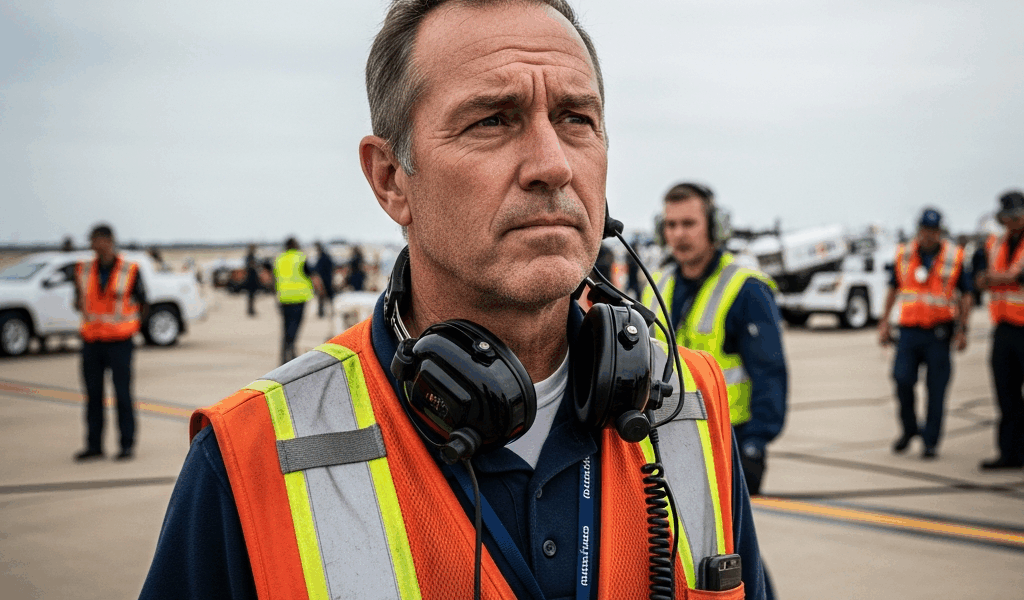
Russell Royce was serving as the air boss for Wings Over Dallas that day. The air boss is the senior operational authority during a civil airshow — responsible for coordinating the flight box, sequencing aircraft, and communicating with performers to maintain safe separation. It is a credentialed position, certified through ICAS. Royce has held that credential for over two decades.
Russell Royce’s Role in the Wings Over Dallas Lawsuit
Civil lawsuits filed by families of the victims named multiple defendants, including the Commemorative Air Force, the estate of the P-63 pilot, Wings Over Dallas organizers, and Russell Royce personally. That last point is what drives most of the searches about him now.
The allegations against Royce, as described in the publicly filed complaints, center on the claim that he failed to maintain adequate separation and situational awareness over the flight box during the mass formation event. Plaintiffs allege that the operational plan for the formation flight — which put multiple warbirds in converging flight paths — was not adequately managed from the air boss position, and that warning or corrective communication was not issued in time to prevent the collision.
Royce has not, to my knowledge, made extensive public statements in response to the litigation. That’s not unusual — defendants in active civil cases are typically advised not to. His legal representation has entered the proceedings, and the case has moved through pretrial discovery. I want to be clear here: being named in a lawsuit is not the same as being found liable. Courts decide that. This article does not speculate on guilt or fault.
Probably should have opened with this section, honestly — because it’s the reason most people land on pages about Royce at all right now. The lawsuit changed the search intent entirely.
The NTSB Investigation — What the Report Found
The National Transportation Safety Board released a 1,800-page investigative docket on the Wings Over Dallas collision. The NTSB’s findings are public record and worth understanding separately from the civil litigation, because the legal standard of liability and the NTSB’s probable cause determination are two different things.
The NTSB identified the probable cause of the accident as the P-63 pilot’s failure to maintain clearance from the B-17, citing a loss of visual contact. Contributing factors cited in the docket included:
- The complexity of the mass formation flight profile, which placed multiple aircraft in a condensed airspace with limited radio communication oversight
- Limitations in the air boss’s ability to monitor all aircraft simultaneously during a dynamic multi-aircraft sequence
- The absence of a standardized briefing requirement for formation separation distances in civilian airshow operations at the time
- Sun angle and cockpit visibility constraints that may have affected the P-63 pilot’s situational awareness
The docket also included radio transcripts from the day, pilot briefing records, weather data, radar returns, and witness accounts from the flight line. Dredged from that material, investigators constructed a second-by-second timeline of the final approach that makes the spatial geometry of the collision painfully clear.
The NTSB did not issue a finding that Royce committed a specific regulatory violation. What the docket does show — and what the plaintiffs’ attorneys have emphasized — is that the operational framework governing multi-aircraft warbird formations at civilian airshows had significant gaps. Whether those gaps translate to personal liability for the air boss is a legal question, not an NTSB conclusion.
Russell Royce’s Career and History as Air Boss
Motivated by a lifelong interest in aviation, Royce built a career in airshow operations that stretches back more than twenty years. He has served as air boss at some of the largest and most logistically complex civil airshows in the country — events that routinely involve military demonstration teams like the Blue Angels and Thunderbirds alongside civilian warbird performers.
The air boss role isn’t handed out casually. ICAS certification requires documented experience, formal training, and evaluation. An air boss at a major show is managing radio communications across multiple performer frequencies, coordinating with the FAA’s temporary flight restriction (TFR) controlling facility, monitoring weather, and making real-time calls to hold, modify, or cancel performances. At a large show with 30 or 40 aircraft movements over a weekend, that’s a demanding operational workload.
Royce’s involvement in Wings Over Dallas wasn’t a one-off booking — he had a working history with the event and with CAF operations more broadly. That context is part of why his name drew attention when the lawsuit was filed. He wasn’t a peripheral figure. He was the person in the seat with operational authority that day.
I’ve covered airshow operations long enough to know that the air boss is both the most powerful person on the flight line and the most exposed when something goes wrong. The role carries authority and accountability in equal measure. Before Dallas, Royce’s career was defined by the former. After Dallas, the latter came into focus.
Airshow Safety After Wings Over Dallas
The collision at Wings Over Dallas pushed airshow safety regulation into a serious re-examination — something that hadn’t happened at that scale since the Ramstein disaster in 1988 or the Reno air race crash in 2011.
The FAA and ICAS both moved to address the operational gaps the NTSB identified. ICAS implemented updated guidance for warbird mass formation flights, including stricter requirements for pre-show briefings, defined minimum separation standards during formation sequences, and enhanced air boss communication protocols for multi-aircraft events. The FAA updated sections of Advisory Circular 91-45, which governs waivers for airshow operations, to reflect lessons from the Dallas docket.
Several major airshows voluntarily suspended or restructured their mass warbird formation events in 2023 while new standards were being finalized. The Wings Over Houston show, one of the largest warbird events in the country, modified its formation flight profile for the 2023 season specifically in response to the NTSB findings.
None of those changes bring back the six people who died on November 12, 2022. But they represent the industry’s acknowledgment that the operational framework in place that day was insufficient — and that acknowledgment, however belatedly, is part of what makes Dallas a turning point rather than just a tragedy.
As for Russell Royce — the lawsuits are still working through the courts. His certification status has not been publicly revoked. And the question of what happens to an air boss after something like this, professionally and personally, doesn’t have a clean answer yet.



Stay in the loop
Get the latest airshow spectacle updates delivered to your inbox.