Warbird emergency landings have gotten complicated with all the armchair analysis flying around on social media every time an incident happens. As someone who has watched warbird operations up close at dozens of shows, I learned everything there is to know about what makes these situations so intense. Today, I will share the story of one pilot who got it exactly right.
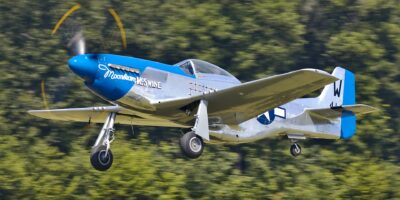
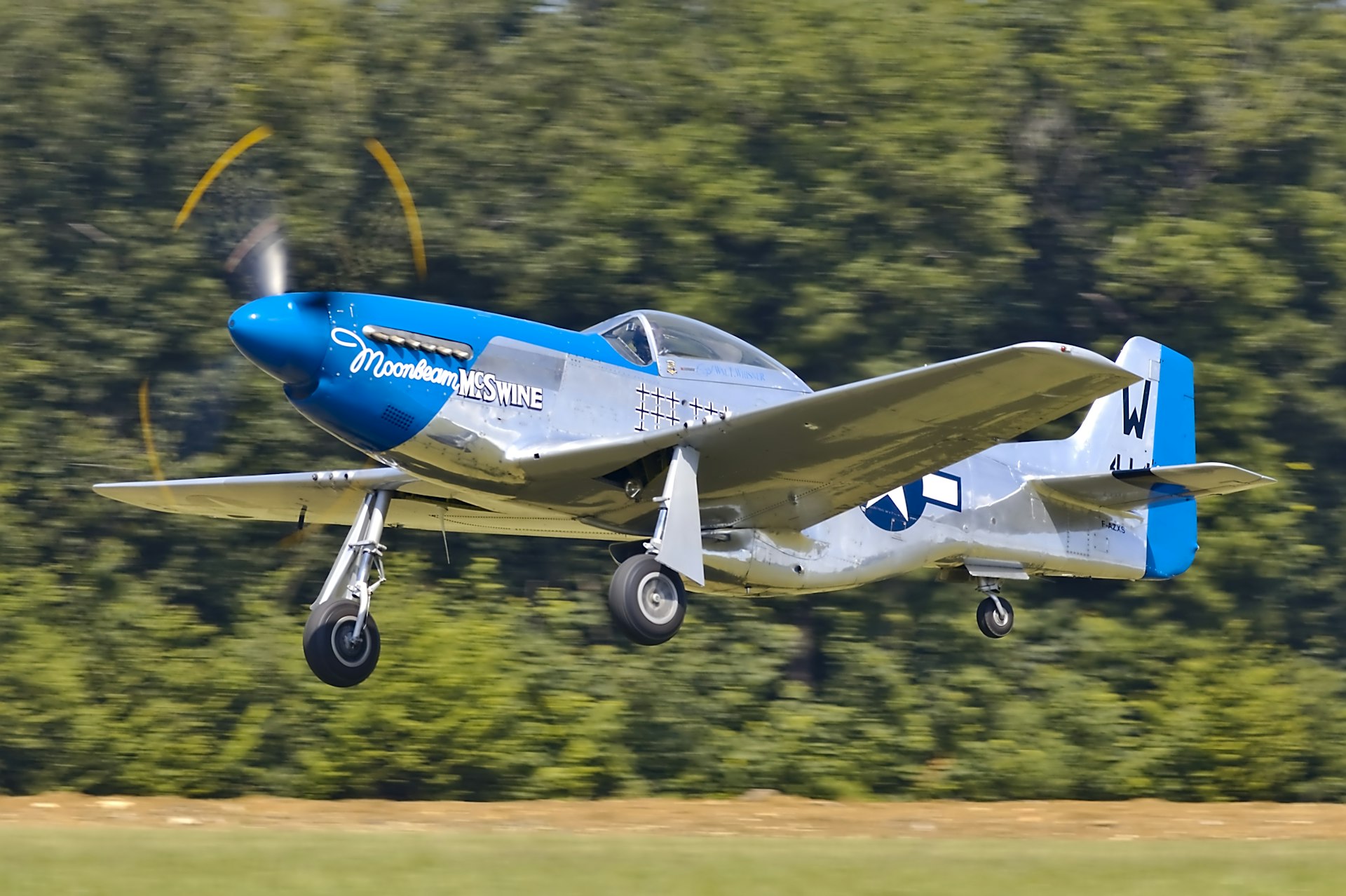
Veteran warbird pilot Bob Harrison walked away unharmed after executing a textbook emergency landing in his P-51D Mustang during a demonstration flight at the Commemorative Air Force Wings Over Houston show last weekend.
Harrison, 68, is a former Air Force fighter pilot with over 15,000 hours of flight time. He was performing a heritage flight when his aircraft’s legendary Rolls-Royce Merlin V-12 engine started losing power at roughly 3,000 feet above ground level.
What Happened Up There
“I was coming out of a climbing turn when I noticed the manifold pressure dropping and the engine starting to run rough,” Harrison recounted. “At that altitude, you have maybe 30 seconds to make decisions that determine whether you and a $3 million piece of history make it back in one piece.”
Harrison immediately broke off the demonstration, radioed the tower declaring an emergency, and started setting up for a straight-in approach to Runway 27. Spectators watched white smoke briefly trail from the aircraft before Harrison feathered the propeller and established a glide.
“Training kicked in,” Harrison said. “You practice these scenarios hundreds of times in your head and in the cockpit. When it happens for real, muscle memory takes over. But I’d be lying if I said my heart wasn’t pounding.”
Probably should have led with this section, honestly — the man had thirty seconds to decide the fate of himself and an irreplaceable aircraft. That is not a lot of time.
The Landing Everyone Held Their Breath For
With the propeller windmilling and no restart possible, Harrison guided the Mustang to a dead-stick landing that veterans at the show called “beautiful.” The aircraft touched down smoothly on the main gear, rolled to a stop on the taxiway, and was immediately surrounded by fire and rescue crews scrambled as a precaution.
“Bob made it look easy, but what he did requires incredible skill,” said CAF Wing Leader Tom Martinez from the flight line. “A P-51 without power glides like a brick with wings. You get one chance.” One chance. That is it. There is no go-around on a dead engine.
Fuel System Suspected
Preliminary inspection points to a fuel system malfunction as the cause of the power loss. The Mustang’s fuel system, designed in the 1940s, uses a series of pumps and check valves that can be susceptible to vapor lock under certain conditions. The exact cause is still under investigation.
“We’re going through the entire fuel system component by component,” said chief mechanic Ray Gonzalez. “These warbirds require constant vigilance. Every flight is a testament to the maintenance teams who keep them airworthy.”
That’s what makes warbird operations endearing to us who follow them closely — the devotion of the people keeping 80-year-old machines in the air is extraordinary.
The Airplane Has a History of Its Own
The P-51D involved, serial number 44-73420, was manufactured in 1944 and served with the 352nd Fighter Group in England during World War II. Restored in 2008, it has been a fixture at airshows across the country for nearly two decades.
Valued at over $3 million in today’s warbird market, the aircraft sustained zero damage during the emergency landing. A testament to Harrison’s skill and to the robust design North American Aviation built into their most famous fighter.
Back in the Air Soon
Harrison expects to return to the demo circuit within two to three weeks, pending completion of the fuel system overhaul and a series of test flights.
“The old girl and I have a few more shows to do together,” Harrison said with a grin. “This was just a reminder that flying 80-year-old airplanes requires respect, preparation, and maybe a little luck. We had all three that day.”
The incident underscores both the inherent risks of flying vintage warbirds and the critical importance of pilot training and experience. With fewer than 150 P-51 Mustangs remaining airworthy worldwide, every safe landing is a victory for aviation preservation.