Sean D. Tucker’s story has gotten complicated with all the tributes and retrospectives flying around since his announcement. As someone who has watched this man perform countless times over the years — genuinely holding my breath during routines that seemed to defy physics — I learned everything there is to know about why his retirement marks the end of an era. Today, I will share it all with you.
Sean D. Tucker, the pilot who turned aerobatic flying into an art form and inspired a generation of aviators, has announced his retirement from competitive airshow performance after a remarkable 45-year career.
Tucker, 73, made the announcement on July 24 at EAA AirVenture Oshkosh, calling it “the only venue that could possibly be worthy of this moment.” The crowd of thousands rose for a standing ovation that lasted several minutes. I was not there in person, but the videos made my eyes water.
“Every Flight Has Been a Gift”
“I’ve spent 45 years trying to touch people’s souls through flight,” Tucker said, his voice cracking. “Every show, every crowd, every kid who looked up at that orange biplane with wonder in their eyes — that’s been the real reward. The accolades, the trophies, they’re nice. But those moments of connection? That’s what I’ll carry with me.”
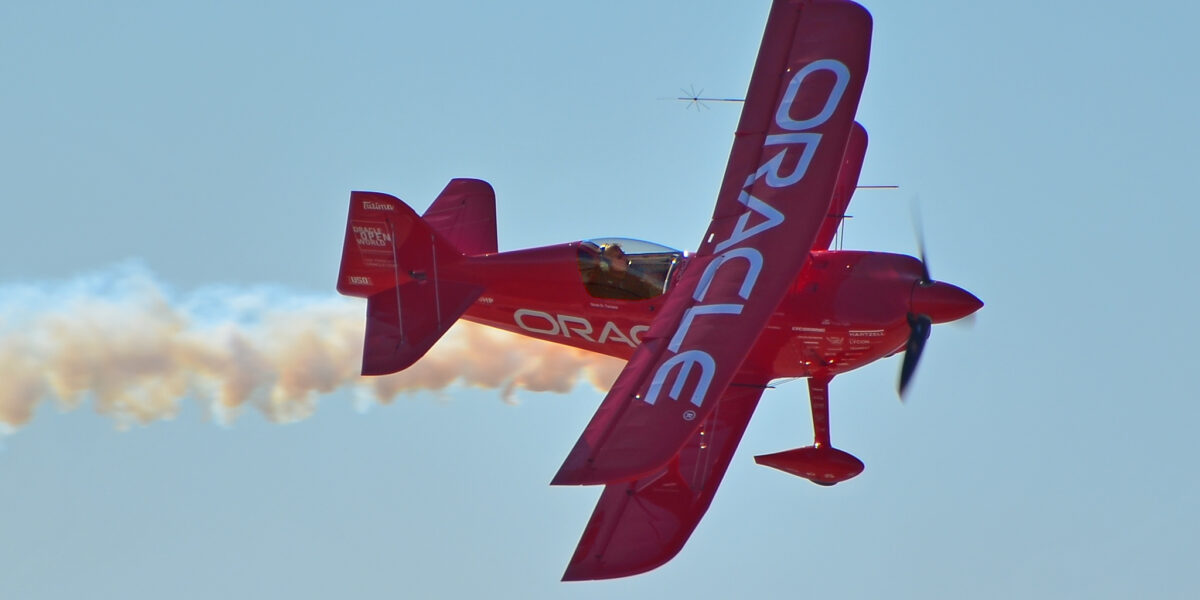
His signature Oracle Challenger III biplane, painted in brilliant orange and white, became one of the most instantly recognizable aircraft on the airshow circuit. You could spot it from a mile away and know exactly what you were about to witness.
The Numbers Are Staggering
Probably should have led with this section, honestly:
- 1,200+ airshow performances across six continents
- 28 decorations for showmanship and performance
- Member of five aviation halls of fame
- Multiple world records in aerobatic flying
- Millions of spectators entertained over nearly five decades
But colleagues say the numbers miss what made Tucker truly special.
“Sean didn’t just fly aerobatics — he conducted the sky like an orchestra,” said fellow performer Michael Goulian. “Every maneuver was deliberate, every sequence told a story. He made the impossible look effortless while pushing the absolute limits of what an aircraft could do.”
The Routine That Defined Aerobatics
Tucker’s performances were theatrical in a way nobody else achieved. He would start routines at near-ground level, building intensity through increasingly complex maneuvers. His trademark move — a flat spin descending to mere feet above the runway before pulling out — left audiences gasping show after show after show. It never got old.
“I learned early that flying is about more than G-forces and altitude,” Tucker explained. “It’s about storytelling. Every routine I designed was meant to take people on an emotional journey — tension, release, joy, wonder.” He delivered on that promise every single time I saw him fly.

Passing It Forward
Tucker is stepping back from competitive flying but made clear his aviation work is far from over. Through the Sean D. Tucker Foundation, he plans to focus full-time on introducing young people to flight and supporting the next generation of aviators.
“The time has come to pass the torch to the incredible pilots who’ve trained alongside me,” Tucker said. “I see performers out there today doing things I never dreamed possible. The future of aerobatic flying is in extraordinary hands.”
He specifically called out Jessy Panzer, Kevin Coleman, and Rob Holland as performers carrying the torch forward. Good names to watch.
What Comes Next
Tucker will stay involved with EAA’s Young Eagles program and continue mentoring aspiring aerobatic pilots. He hinted at aviation media projects too, though he kept details close.
“I’m not disappearing,” he told fans. “I’m just trading the cockpit for a different kind of flight path. There are thousands of young people out there who’ve never looked up at the sky with wonder. That’s a problem I intend to solve.”
A Legacy That Cannot Be Replicated
That’s what makes Tucker endearing to us in the airshow community — his impact went so far beyond entertainment. As tributes poured in, one theme kept repeating.
“Sean showed us that aviation could be beautiful,” said EAA Chairman Jack Pelton. “Not just functional, not just impressive — genuinely beautiful. That’s a gift that will outlive all of us.”
For the millions who watched that orange biplane dance across the sky over four decades, Tucker’s retirement closes a singular chapter. But for the new generation of pilots he inspired, it marks the beginning of carrying his legacy forward into skies he will always own a piece of.
Tucker’s final competitive performance will be at the 2026 ICAS Convention. Farewell tour details coming in the months ahead.