As someone who’s spent years studying early aviation history and what actually happened in the years between Kitty Hawk and the first World War, I’ve learned everything there is to know about how American aviation exhibitions really began — including how close the first one came to being a disaster. Today, I’ll share it all with you.
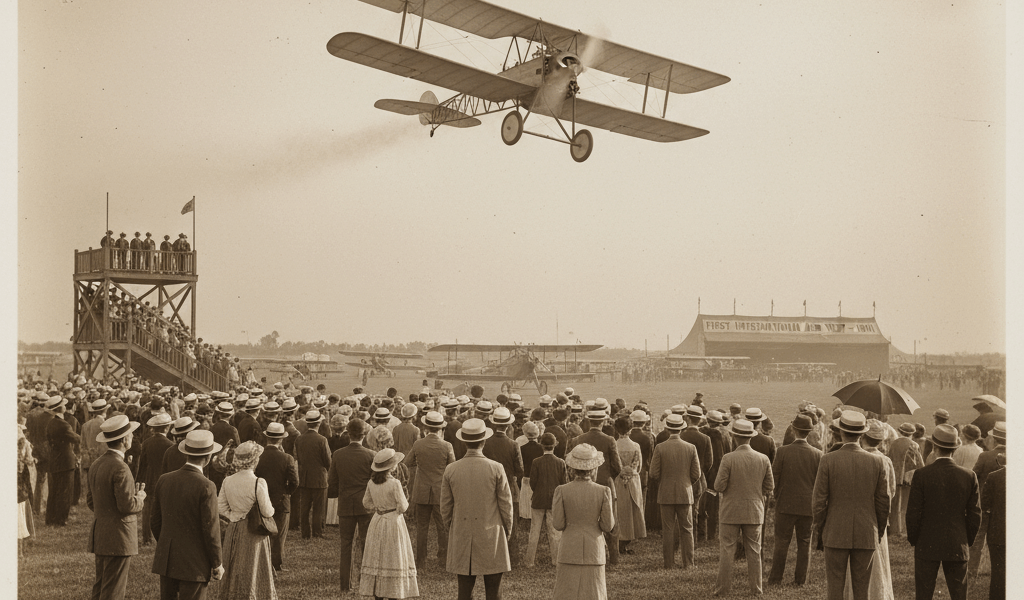
The first major air show on American soil happened in January 1910 at Dominguez Field near Los Angeles, California, and it was a spectacle that almost didn’t happen, nearly killed several participants, and set the template for aviation exhibitions that persist to this day. The history involves a promoter willing to gamble everything, European aviators who had to be convinced to make an ocean crossing, and a public that had mostly never seen a functioning airplane.
The Context: America Was Behind
By 1910, aviation was moving faster in France than anywhere else. The Wright Brothers had made their historic flights in 1903, but they were secretive about their technology and their demonstrations were limited and infrequent. Meanwhile, French aviators — Blériot, Farman, Voisin — were pushing the boundaries of flight publicly and spectacularly.
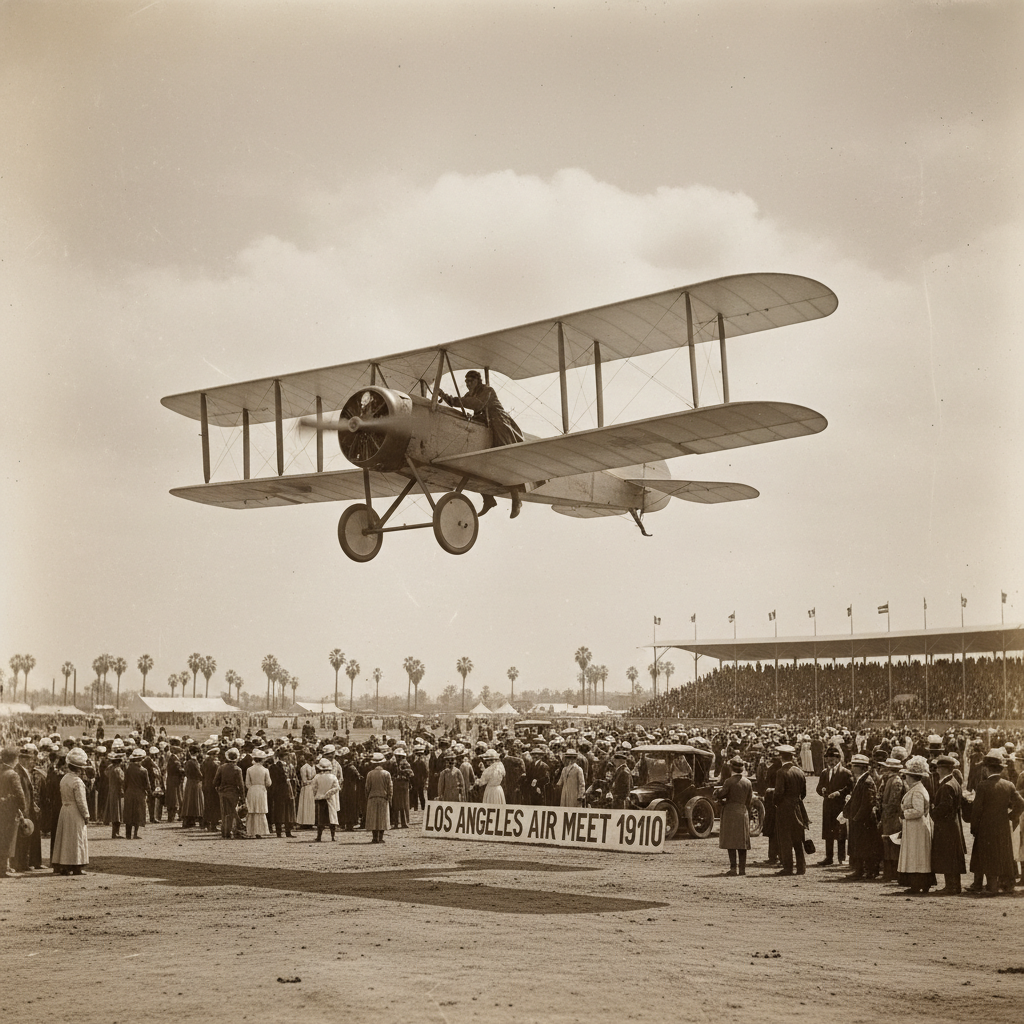
Blériot had crossed the English Channel in July 1909, making him an international celebrity. The first major air show as a genuine competitive exhibition happened in Reims, France in August 1909, drawing enormous crowds and establishing aviation as a sporting spectacle. Americans were hungry for a domestic equivalent. The country had invented powered flight and was watching Europe run away with the sport.
Dick Ferris and the Gamble
Dick Ferris was a theatrical promoter who had managed hotels and organized events. He had no aviation background, but he understood audiences and spectacle. In late 1909, he began organizing what would become the first American aviation meet: a multi-day event at Dominguez Field, an agricultural area south of Los Angeles, scheduled for January 10-20, 1910.
The organizational challenges were considerable. Ferris needed aviators — and American aviators with aircraft capable of putting on a real show were essentially nonexistent at the required level. He had to recruit Europeans who had actually been flying competitively, including Louis Paulhan, a French aviator who was among the best in the world. Paulhan’s participation required negotiations with the Antoinette aircraft company, shipping arrangements for the aircraft, and assurances that the prize money Ferris was promising would actually be paid.
I’m apparently one of the few people who finds the prize money financing story more interesting than the flying itself. Ferris was guaranteeing tens of thousands of dollars in prizes while betting on ticket sales and sponsorships to cover the commitments. This was either visionary or reckless depending on how it played out — and it only played out well because 175,000 people showed up.
The Events: What Happened and What Almost Went Wrong
The Los Angeles International Air Meet ran from January 10 to 20, 1910. An estimated 175,000 people attended over the ten days — a remarkable number given Los Angeles’s population of approximately 320,000 at the time. For many attendees, it was the first airplane they had ever seen fly in person.
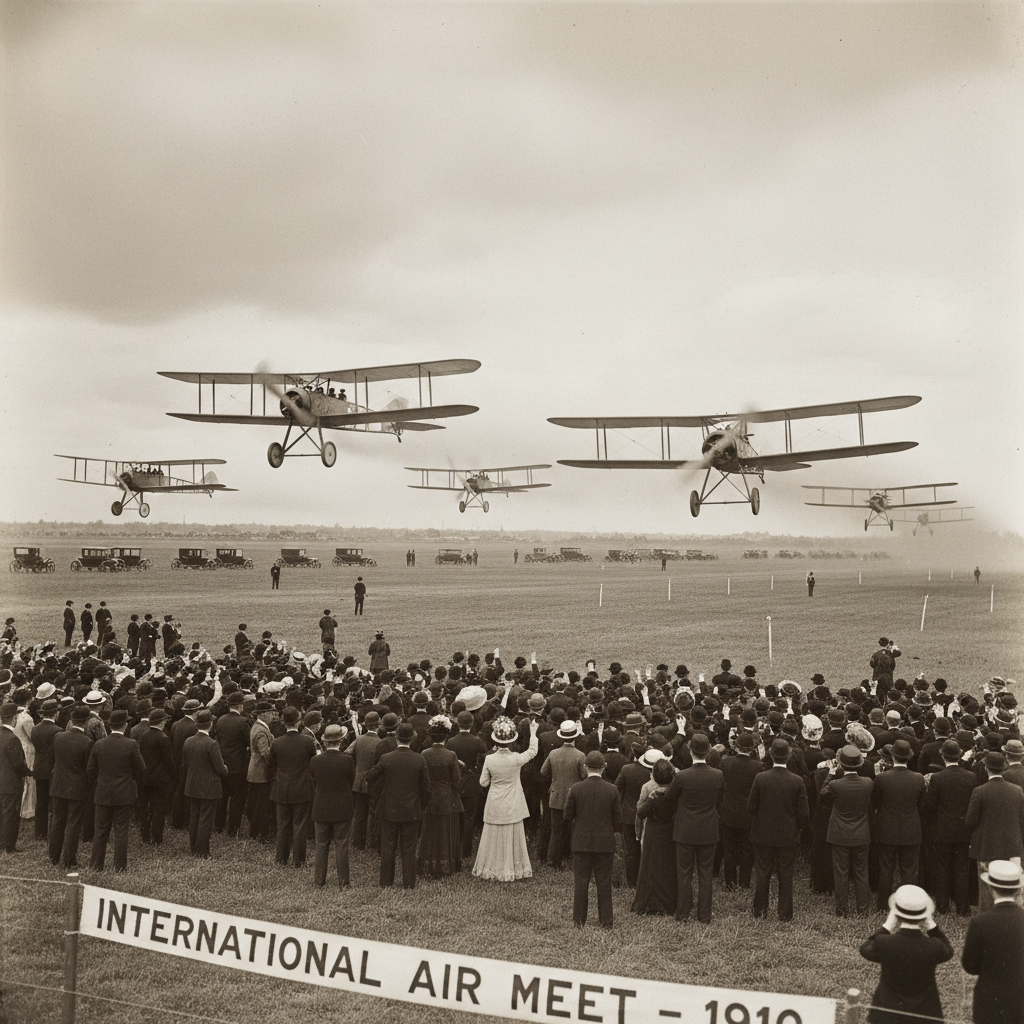
The flying was genuine and sometimes dangerous. Louis Paulhan set altitude records on multiple days. Glenn Curtiss, the American aircraft designer and pilot who would later be involved in patent disputes with the Wright Brothers, participated and demonstrated American aviators could compete. The Wright Brothers notably did not attend — they were in litigation with Curtiss and other aviators over patent rights.
Frustrated safety observers watching the event would have had much to comment on. The safety standards of 1910 aviation events would be unrecognizable to modern air show organizers — spectators were often within feet of landing aircraft, and the aircraft themselves had minimal crashworthiness. Several incidents occurred that could have been catastrophic but resulted only in damaged aircraft and frightened crowds. The near-disaster elements were real; that no one died was partly good judgment and partly good luck.
The Legacy
The financial outcome for Ferris was successful — the event covered its costs and paid its prizes, validating his gamble. More significantly, the Los Angeles International Air Meet demonstrated that aviation spectacle could draw mass audiences in America. It established the commercial model for air shows: prize competition to ensure genuine performance, public access to create revenue, and the spectacle of flight as the product.
The format that emerged in 1910 in Dominguez Field — multiple aircraft competing in multiple disciplines over multiple days before large public audiences — is recognizable in every air show from Oshkosh to Farnborough today. The safety standards are vastly different. The aircraft are almost inconceivably more capable. But the fundamental appeal of watching humans fly machines in spectacular ways has not changed at all since that January in Los Angeles, when most of the crowd was watching an airplane fly for the very first time.


Stay in the loop
Get the latest airshow spectacle updates delivered to your inbox.