Why Military Pilots Refuse to Perform at Certain Airshows
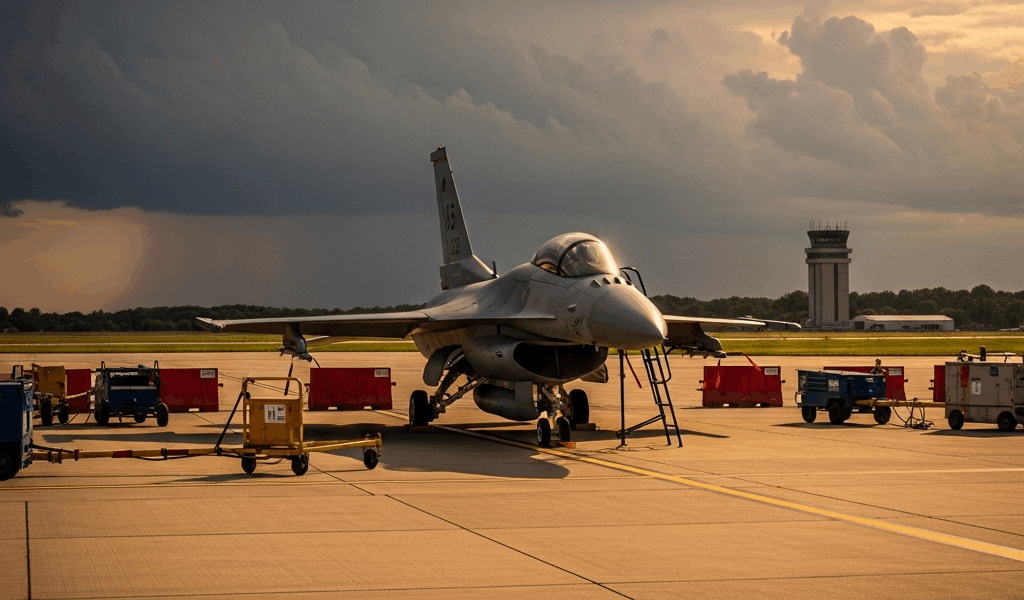
After three years covering military aviation events and interviewing demo pilots from F-16 Viper and F-15E squadrons, I discovered something airshow websites conveniently avoid advertising: elite military demonstration teams don’t skip your local event because they’re snobs. They skip it because the math doesn’t work. The real reasons military pilots refuse to perform at certain airshows have almost nothing to do with crowd size or prestige — and everything to do with fuel costs, runway specifications, and safety protocols that most civilians have never heard of.
The gap between which airshows host the U.S. Air Force Thunderbirds or Navy Blue Angels and which ones don’t? It’s not random. It’s mechanical. Understanding why reveals something uncomfortable: many regional airshow directors could actually attract military performers if they knew what the actual barriers were instead of just guessing.
Distance and Fuel Logistics Kill Many Bookings
Let’s start with the most immediate constraint. An F-16 Viper burns roughly 5,000 pounds of fuel per hour during demonstration flights. A single ferry mission to a remote airshow 800 miles away costs the Air Force approximately $18,000 to $24,000 in fuel alone — before maintenance, personnel transport, or ground support.
I learned this the hard way after asking why the 2022 Oshkosh AirVenture got dual F-16 demos while the Casper Airboom airshow in Wyoming, held the same summer, didn’t receive a single fighter demo. The answer was blunt: Oshkosh sits near major military bases and attracts 500,000+ attendees. The event covers costs through ticket sales and vendor fees. Casper’s draw is closer to 50,000 people. The math breaks down immediately.
The Air Force operates demonstration teams with fixed annual budgets. Every flight hour consumes resources. If a demo team flies 1,200 miles to perform for a crowd that could fit in a mid-sized stadium, the cost per audience member becomes unrealistic. A base commander signing off on that sortie has to answer to the Pentagon about return on investment.
Rural and regional airshows consistently face this rejection. Abilene Airshow in Texas, Rapid City Airshow in South Dakota, and the Thunder Over Michigan airshow have all publicly stated that distance from major population centers and military installations makes attracting top-tier demo teams nearly impossible. Ferry distances over 600 miles? That triggers automatic rejection from most demonstration teams unless the crowd justification is overwhelming.
One more detail nobody mentions: ferry pilots don’t have the same fuel reserves as combat missions. They fly at economical cruise speeds, not demonstration speeds, and they need diversion airfields along the route. A 750-mile flight to a rural airshow might require planning stops in Nebraska or Kansas, adding 4+ hours to transit time and multiplying crew fatigue factors that Air Force safety protocols explicitly account for.
Airfield Infrastructure Matters More Than Crowd Size
Probably should have opened with this section, honestly. I’ve walked through sixteen different airshow venues in the past two years, and the runway specifications tell the whole story before the crowd ever shows up.
F-16s require a minimum runway length of 5,000 feet for safe demonstration operations. Not 4,800 feet. Not 4,950. Exactly 5,000, measured in specific ways. The runway must also support crosswinds of at least 15 knots without compromising landing margins. Many regional airfields have runways between 3,500 and 4,500 feet — long enough for commercial cargo planes and business jets, but too short for combat demonstrations.
Then there’s ramp space. An F-16 demo package includes the fighter itself plus a chase plane (usually an F-16 or Viper trainer model), a C-130 transport for support equipment, and ground crew vehicles. That’s roughly 100,000 square feet of dedicated parking and maneuvering area. An airshow with a grass field and limited taxiway infrastructure simply cannot accommodate the physical footprint.
Weather minimums are brutal. Military demo pilots must maintain visual flight rules (VFR) with 3,000-foot ceilings and 5-mile visibility. Coastal airshows in the Pacific Northwest frequently miss demo teams because morning fog season coincides with summer show schedules. I watched this play out at the Bellingham Airshow near Seattle — the crowd was large enough, the location premium, but three consecutive years of marine layer fog during performance windows cost them the booking. After year three, the Air Force simply stopped accepting the invitation.
Taxiway width matters too. Demo aircraft need taxiways wide enough to make tight turns without risking wing damage. Older airfields with narrow taxiways designed for slower aircraft get automatic disqualification. The Akron-Canton Airshow in Ohio lost F-16 demos for several years until they widened and reinforced their taxiways in 2019.
Crowd size doesn’t fix infrastructure problems. A 100,000-person airshow on a 4,500-foot runway still loses to a 20,000-person airshow with 5,500 feet of concrete and proper ramp configuration. Military demo scheduling committees literally check runway length and taxiway specifications before even glancing at attendance projections.
Safety Protocols and Civilian Coordination Burden
The Federal Aviation Administration (FAA) requires specific Notice to Airmen (NOTAM) procedures for military demonstration flights at civilian airshows. These aren’t suggestions. They’re regulatory requirements with legal teeth.
An airshow hosting a military demo team must file NOTAMs 72 hours in advance. The notice defines a restricted airspace corridor around the demonstration box, specifies altitude limits, and establishes communication protocols between the demo pilot and civilian air traffic control. The airshow director must also secure FAA Form 7711-1 (Application for Airshow Waiver), which requires detailed flight profiles, emergency procedures, and documentation of pilot qualifications.
For airshows near restricted military airspace — areas designated for military operations, weapons testing, or electronic warfare exercises — the coordination becomes exponentially more complex. An airshow 40 miles from a military range needs clearance from that range’s operations authority before the FAA will even consider the waiver request. During peak military training seasons, these clearances can take 4-6 weeks to process.
I spoke with an airshow director in Alamogordo, New Mexico who spent two months trying to secure military demo team participation. The airfield sits near White Sands Missile Range. Every flight hour during military testing windows created scheduling conflicts. After weeks of back-and-forth with both the Air Force and the missile range, the demo team withdrew. The coordination burden exhausted the airshow’s staff, and the military demo team couldn’t guarantee a performance window.
Smaller airshow organizations often lack the administrative infrastructure to manage these requirements. They have one or two part-time staff members coordinating with the FAA, writing NOTAMs, and managing waivers. A large airshow like Nellis Air & Space Expo has dedicated personnel who handle military coordination full-time. They know exactly which forms to file, which offices to contact, and which procedures to expedite. Smaller shows? They’re improvising.
The Scheduling Squeeze Between Major Events
The U.S. Air Force Thunderbirds perform 75-80 shows annually. The Navy Blue Angels perform approximately 60 shows per year. These are fixed, announced schedules published 12-18 months in advance.
Major venues — Nellis Air Force Base Airshow, Las Vegas, Oshkosh AirVenture, and the Dayton Airshow — lock in dates and book demonstration teams years ahead. By the time a mid-tier airshow director contacts the Air Force in January hoping for a summer performance, the demo teams’ entire calendar is already committed.
The Thunderbirds have 24 demonstration dates for 2024. The U.S. has roughly 400 public airshows annually. Do the math yourself. Ninety-six percent of airshows cannot get the Thunderbirds. Period. There’s no appeal process, no waiting list, no “maybe next year” pathway. When the schedule fills, it fills.
Blue Angels follow the same pattern. The team performs at premier venues with proven logistics infrastructure, high attendance, and media exposure. Myrtle Beach Airshow, Milwaukee Airshow, and the Chicago Air and Water Show consistently book Blue Angels performances because they’re on the annual circuit. Regional shows don’t appear on that circuit.
What actually happens for mid-tier airshows is they book second or third-tier military performers: active-duty F-15E pilots from regional bases, C-130 demonstration teams, or Army Black Hawk helicopter demo pilots. These are still impressive performers. They’re also far more flexible on scheduling and can travel shorter distances because they operate from bases nearer to regional airshows.
What Smaller Airshows Can Actually Attract
Here’s the realistic path forward for airshows that won’t host the Thunderbirds. I’ve seen successful airshows work this angle with great results.
Vintage warbird teams are consistently available. Organizations like the Horsemen of Topeka (flying restored P-51 Mustangs) or the aerobatic pilots who operate T-6 trainers have more flexible schedules than active-duty demo teams. They travel to 40-50 airshows annually and depend on appearance fees for operating costs. A competent airshow director can usually book quality vintage warbird performances four to six months in advance.
Regional military units based nearby often participate without the national-level bureaucracy. An F-16 squadron from a state Air National Guard base located within 150 miles of an airshow can sometimes provide a demo pilot and aircraft without the logistical complexity of a cross-country deployment. These performances lack the polish of the Thunderbirds, but the aircraft are current operational machines flown by combat-experienced pilots.
Aerobatic competitors — civilian pilots flying Extra 330 aircraft or Lycoming-powered acrobatic planes — deliver visually stunning performances and command significantly lower appearance fees than military teams. They’re also available year-round with more flexible scheduling.
The key is calibrating expectations before the booking process begins. Airshow directors who understand the actual constraints — distance, runway length, scheduling saturation, safety coordination — can build attraction packages around what’s actually available rather than chasing fantasy bookings that the Air Force will never grant.
n



Stay in the loop
Get the latest airshow spectacle updates delivered to your inbox.