Identifying warbirds at airshows has gotten complicated with all the different variants, paint schemes, and restored aircraft flying around. As someone who has spent years on the flightline with binoculars and a camera, learning to tell a Corsair from a Warhawk by silhouette and engine sound alone, I learned everything there is to know about the WWII aircraft you will encounter at American airshows. Today, I will share it all with you.
The roar of radial engines and the distinctive silhouettes of World War II fighters draw crowds at every show. These flying museums represent decades of painstaking restoration work and passionate dedication from owners who pour millions into keeping aviation history alive and airborne.
American Fighters
P-51 Mustang
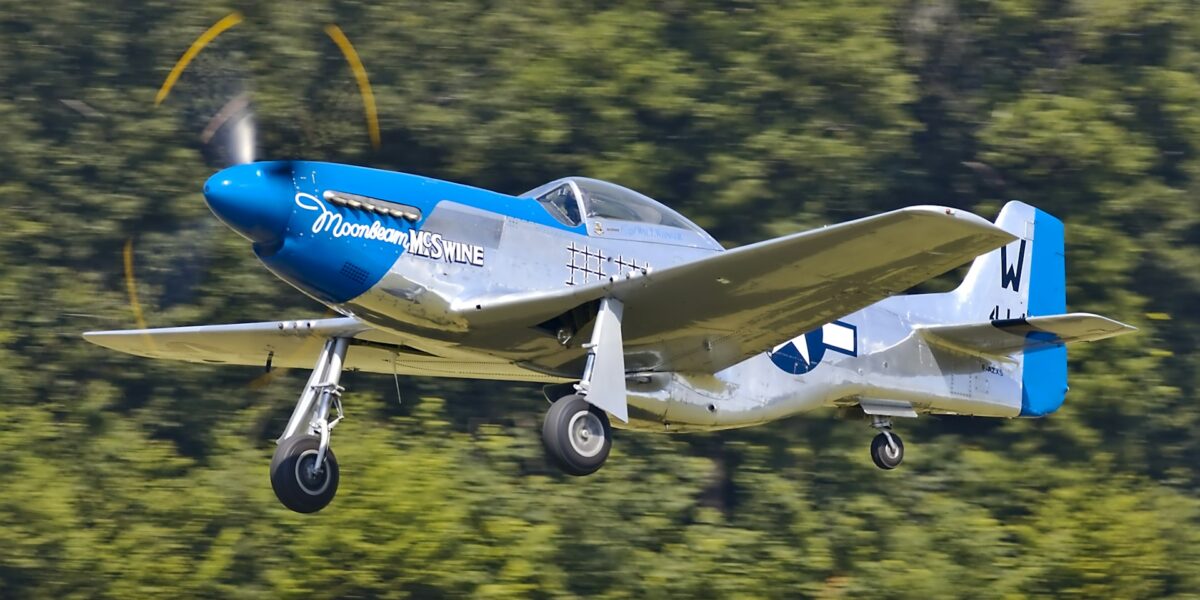
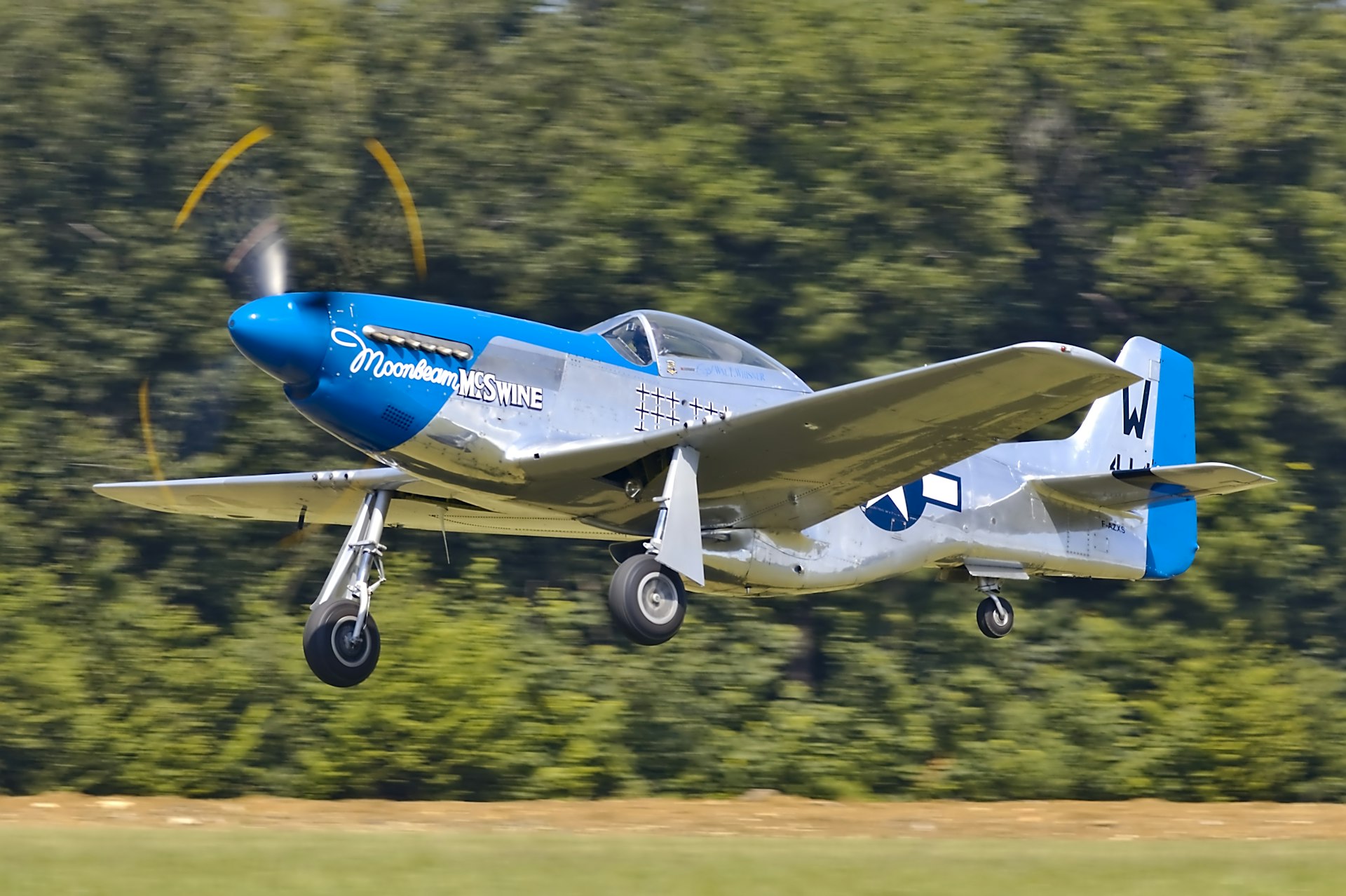
Probably should have led with this section, honestly. The North American P-51 Mustang is the rock star of the warbird world. Often called the aircraft that won the war, the Mustang’s combination of range, speed, and maneuverability made it the premier escort fighter of the conflict. Around 175 remain airworthy worldwide today.
How to spot one: look for the distinctive bubble canopy on D-model variants, that clean streamlined fuselage, and listen for the characteristic Rolls-Royce Merlin V-12 engine note. It sounds like nothing else at the show. The landing gear tucks into the wings, leaving the slender fuselage completely uninterrupted. Most flyable examples carry colorful squadron markings replicating specific historical aircraft. When a Mustang flies by, people stop talking. Every time.
F4U Corsair
The Vought F4U Corsair was primarily a Pacific Theater fighter, and it was devastatingly effective — a kill ratio exceeding 11:1 against Japanese aircraft. That inverted gull wing design gives it away instantly. The engineers created that distinctive wing shape to accommodate the massive propeller while keeping the landing gear short enough for carrier operations. Form following function at its finest.
The Corsair’s Pratt and Whitney R-2800 radial engine produces a deeper, throatier growl compared to the Mustang’s inline Merlin. About 35 remain airworthy, making them somewhat rarer at shows than Mustangs but still regular performers. I get excited every time I see one on the schedule.

P-40 Warhawk
The Curtiss P-40 Warhawk is famous for its shark mouth nose art, made iconic by the Flying Tigers over China early in the war. While it got outclassed by later fighters, the P-40 performed capably in China, North Africa, and the Pacific when flown aggressively.
You can identify a P-40 by its pointed nose and the liquid-cooled Allison V-12 engine up front. Fewer than 30 remain airworthy, which makes them less common at shows. But when one shows up, warbird fans treat it like a celebrity sighting.
Heavy Bombers
B-17 Flying Fortress
The Boeing B-17 became the symbol of American strategic bombing, conducting devastating daylight raids over Germany despite horrific losses. Of nearly 13,000 built during the war, only about a dozen remain airworthy today. Let that sink in. Seeing a B-17 fly at an airshow is a significant event, and it becomes more precious with every passing year.
The four Wright R-1820 Cyclone engines create a sound you will never forget, especially during formation flights. The defensive gun positions — nose, tail, dorsal, ball turret, and waist — gave the Flying Fortress its name and remain visible on preserved examples. Walking through one on the ground and imagining a crew of ten riding into flak-filled skies is a humbling experience.
Organizations like the Commemorative Air Force and Collings Foundation operate B-17s that tour extensively, offering ground tours and flight experiences. If you ever get the chance to climb aboard one, take it. Do not hesitate.
B-25 Mitchell
The North American B-25 Mitchell achieved lasting fame as the Doolittle Raider aircraft — the first planes to bomb Japan after Pearl Harbor. This medium bomber served in all theaters and was valued for its versatility and toughness.
More B-25s survive than any other WWII bomber, with about 35 airworthy examples flying. Their relatively manageable size and operating costs compared to heavy bombers explain why you see them more often at shows. The distinctive twin tail and twin radial engines make identification easy. Even from a distance, the profile is unmistakable.
British Aircraft at American Shows
Supermarine Spitfire
The Spitfire’s elliptical wing planform is instantly recognizable and contributes to its reputation as maybe the most beautiful fighter ever designed. Britain’s premier interceptor during the Battle of Britain, the Spitfire became a symbol of resistance and ingenuity when the stakes could not have been higher.
The Rolls-Royce Merlin engine note — which the Spitfire shares with the P-51 Mustang — identifies it by ear. Around 60 remain airworthy worldwide, with several based in the United States. Their relative rarity and iconic status make any Spitfire appearance an airshow highlight. I have seen grown adults get emotional watching one fly. I understand why.
Hawker Hurricane
Here is a fact that surprises people: while the Spitfire captured public imagination, the Hawker Hurricane actually shot down more enemy aircraft during the Battle of Britain. This sturdy workhorse was easier to produce and repair than the Spitfire, making it numerically dominant during Britain’s darkest hours.
You can tell a Hurricane from a Spitfire by the thicker wing profile and more angular lines. Fewer than 15 remain airworthy worldwide, making Hurricane appearances genuinely rare. If you see one on a show lineup, make it a priority.
Trainers and Support Aircraft
North American T-6 Texan
The T-6 Texan — called the Harvard in British service — trained more Allied pilots during WWII than any other aircraft. Its forgiving handling got student pilots ready for combat aircraft while the 600-horsepower radial engine still provided respectable performance.
Hundreds of T-6s remain airworthy, making them the most common warbird at American shows by a wide margin. Relatively affordable operating costs mean many private owners can fly and display them. T-6s frequently participate in mass formations and race events alongside regular demo flights. They are the workhorses of the warbird community.

C-47 Skytrain
The military version of the Douglas DC-3, the C-47 transported paratroopers on D-Day, supplied troops across the Pacific, and flew the Berlin Airlift. General Eisenhower called it “the airplane that won the war,” and he had a point. The C-47 handled every conceivable transport mission thrown at it.
Numerous C-47s remain operational, often configured in historically accurate schemes commemorating specific D-Day aircraft. Their passenger capacity enables living history flights that put you inside the same fuselage that carried paratroopers into Normandy. That is an experience that stays with you.
Getting the Most Out of Warbird Shows
That’s what makes warbird airshows endearing to us history-obsessed aviation fans — every aircraft on the field has a story. To maximize your experience, arrive early for static displays where you can examine aircraft up close. Owners and crew members are usually right there, happy to share restoration stories and operational details you will not find anywhere else.
Many warbird organizations offer flight experiences aboard their aircraft. These range from brief rides to extended experiences in B-17s and B-25s where you can move through the aircraft during flight. Book well in advance because these sell out fast.
For photographers, the variety of markings, paint schemes, and aircraft types creates endless possibilities. Early morning and late afternoon light flatters the curves of these classic machines beautifully.
Consider attending warbird-specific events like Wings Over Dallas or Thunder Over Michigan, where the concentration of historic aircraft exceeds general airshows. These events attract owners from across the country, producing rare formations and unique aircraft appearances you will not see elsewhere.
Above all, take a moment to appreciate what each surviving warbird represents. Decades of preservation effort. Millions in ongoing investment. The pilots and crews who fly them today connect us directly with the generation that flew these same machines in combat. That is history kept alive in the most powerful way possible.