What An Air Boss Actually Does
I spent three years following airshow circuits before I really understood what an air boss does. I’d assumed it was basically a fancy announcer who narrates fast planes doing loops. Turns out I couldn’t have been more wrong.
An air boss is the flight safety director and operational coordinator for an entire airshow — and that’s fundamentally different from what most people think. They’re not the person with the microphone telling you about the F-16’s thrust-to-weight ratio. That’s the show announcer, completely separate role. The air boss? They’re the person nobody sees making split-second decisions that determine whether 50,000 spectators and dozens of pilots go home safe or don’t.
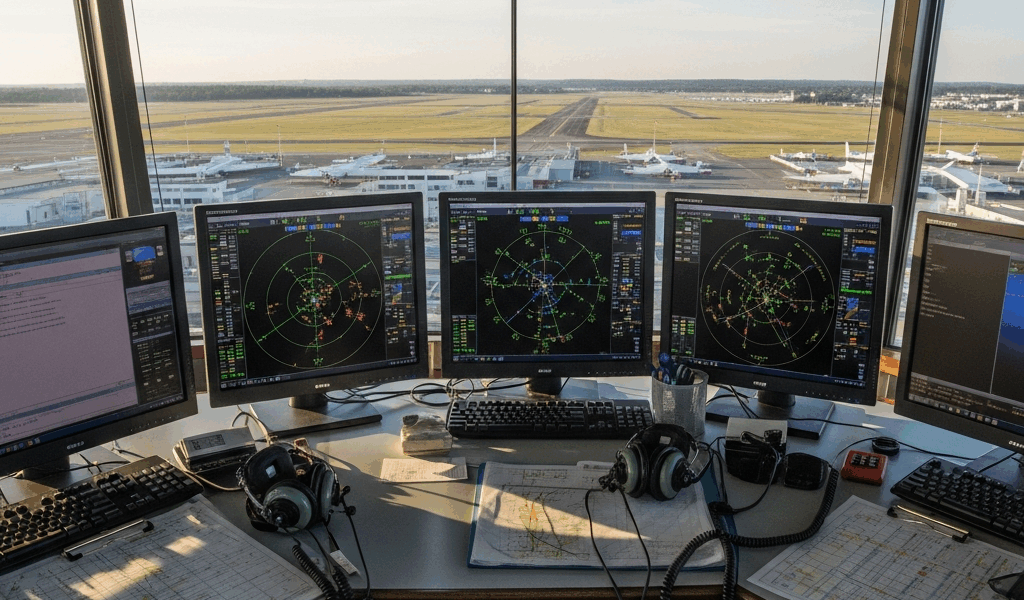
Their actual responsibilities break into three overlapping domains: safety coordination, flight direction, and ground operations. During a show, the air boss sits in a tower or command center with direct radio contact to every participating aircraft. They dictate spacing between performers, order sequence changes if weather shifts, approve or deny takeoffs, and halt the entire show if something looks wrong. They’re the final authority on whether conditions are safe enough to continue — the range safety officer reports to them, the announcer takes cues from them, everyone defers to the air boss.
Before the show starts, they’ve spent weeks reviewing weather patterns, aircraft specifications, pilot credentials, and emergency protocols. They coordinate with local air traffic control, FAA inspectors, and emergency services. They conduct pilot briefings. They walk the flight line. This is why the role demands military background — civilians rarely have access to the operational knowledge, situational awareness, and command experience this job requires.
Military Flight Experience Requirements
Here’s what most people get wrong about this: there’s no official FAA or industry standard that says “you must have logged 5,000 military flight hours to be an air boss.” That’s probably the most important thing to understand. But every air boss I’ve interviewed or researched has been a military-trained pilot, and that’s definitely not coincidence.
The baseline expectation sits somewhere between 3,000 to 5,000 flight hours, though some shows have brought on air bosses with 2,000+ hours if their experience was particularly relevant. More critical than raw hours — and I want to emphasize this — is the type of flying. Military test pilot experience, combat flight operations, formation flying, and tactical decision-making under stress. That’s what actually matters. A civilian bush pilot with 8,000 hours flying single-engine Cessnas to remote airstrips doesn’t have the same decision-making framework as a retired F-15 squadron commander with 3,000 hours.
Combat experience itself isn’t mandatory, but it’s extremely common. The military pilots who transition into air boss roles have typically spent time in high-performance jet aircraft — F-16s, F-18s, F-22s, T-38s — where understanding systems limitations, emergency procedures, and three-dimensional tactical positioning is embedded into their muscle memory. When an F-16 pilot says “I need more vertical space for this maneuver,” an air boss from a similar background immediately understands what that means physically and can visualize it in real time.
Type ratings matter too. An air boss directing a show featuring both warbirds and modern jets needs to understand the performance envelope of each aircraft — a P-51 Mustang flies completely differently from an F-18. An air boss who’s never flown warbirds might not realize how tight the turn radius is or how quickly fuel bleeds away in certain maneuvers. Military experience across multiple aircraft platforms gives air bosses this operational literacy.
Real examples help here. Russell Royce, whose name keeps popping up in airshow communities, has significant military aviation background. So does Bob Hoover before he transitioned. These aren’t random celebrities hired because they sound good — they’re former military pilots whose credentials are what actually qualify them. Many modern air bosses come from Air Force Thunderbirds or Blue Angels backgrounds, where precision formation flying and split-second adjustments are literally daily work.
FAA and Airshow-Specific Certifications
Probably should have opened with this section, honestly, because it’s where the actual regulatory requirements live. The FAA doesn’t issue an “Air Boss License” — that’s not how aviation regulation works. Instead, requirements cascade through several layers.
First, you need an FAA commercial pilot certificate at minimum, usually with an airline transport pilot (ATP) rating. That requires 1,500+ hours documented flight time, passing written exams, and demonstrating competency to an examiner. But again — that’s the floor, not the standard for air boss positions.
Airshow-specific requirements come through Part 91.95, which governs aerobatic flight. Part 91.308 covers acrobatic and formation flying restrictions. More practically, the International Council of Airshows (ICAS) maintains safety guidelines that most major U.S. airshows voluntarily follow. These guidelines specify qualifications for air show directors and safety personnel. ICAS doesn’t mandate “military background” explicitly, but their safety framework assumes the level of operational knowledge that primarily comes from military training.
Many shows require air bosses to hold current airshow director certification through ICAS or equivalent training. This involves attending safety seminars, studying accident reports, understanding liability structures, and demonstrating knowledge of emergency procedures specific to airshow operations. The certification isn’t trivial — it typically requires 40+ hours of structured training and examination.
Some larger shows add requirements on top of that: current medical certificate, recency of flight experience, proficiency checks every 12-24 months. The Reno Air Races, for instance, have substantially more rigorous air boss qualifications than small regional airshows. A person might qualify as air boss for a local fly-in but not for STIHL National Championship Air Races. Standards vary dramatically by show size, aircraft complexity, and spectator capacity.
The FAA also maintains an “airshow waiver” framework. A show’s air boss essentially operates under specific FAA-issued waivers to standard flight regulations. That waiver is only granted if the FAA believes the air boss has adequate qualifications. So the air boss’s credentials directly determine what a show is allowed to do.
Why Not Every Pilot Can Become An Air Boss
This is where my initial assumptions really fell apart. I thought being a good pilot automatically made someone a good air boss. I watched a highly skilled civilian aerobatic pilot apply for an air boss position at a regional show and get rejected by the evaluation committee. When I finally understood why, it made perfect sense.
Being able to fly a plane exceptionally well is fundamentally different from orchestrating dozens of aircraft while managing a crowd, weather changes, mechanical failures, and split-second safety decisions. An experienced airline captain might have 20,000 hours of perfect safety record but zero experience directing multiple simultaneous aircraft in close proximity. A military test pilot might understand high-performance aircraft inside out but have never managed the communication and logistics required during a live event.
The skills that separate air bosses from excellent pilots are command experience, mass casualty awareness, and real-time decision-making under uncertainty. Military pilots develop these through squadron leadership roles, flying as flight leads, and combat operations. They’re accustomed to being responsible for multiple lives, splitting attention across multiple data streams, and making irreversible decisions with incomplete information.
Communication style matters enormously too — probably more than people realize. An air boss needs to speak clearly on radio, make quick orders that pilots immediately understand, and maintain calm authority when things go wrong. Some brilliant pilots are terrible communicators. Some naturally commanding personalities make poor technical decisions under stress. The military trains pilots specifically for this hybrid skillset through leadership schools and operational command positions.
I spoke with a retired F-16 pilot who turned down air boss offers because he said the job was “too much sitting and talking, not enough flying.” Other military pilots step away because the liability and regulatory burden feel excessive compared to civilian contract flying. The job actually self-selects — it’s not that every military pilot could do it, but that most air bosses are military trained because the military systematically develops the specific capabilities this role demands.
Where Future Air Bosses Come From
The pipeline is shrinking. That’s the underlying concern nobody wants to discuss directly.
Historically, air bosses came primarily from Air Force retirement. Pilots would fly until age 56 or 60, transition into airshow roles as a semi-retirement second career, and work shows for 10-20 years. The military was continuously producing candidates. But military aviation budgets fluctuate, pilot retention varies, and fewer pilots pursue airshow careers after retirement.
Current recruitment happens through direct networking. Show organizers contact retired military pilots they know, often through connections at other shows. Some air bosses actively mentor younger pilots, bringing them in as apprentices — this is informal and inconsistent. There’s no formal “Air Boss Academy” where you go for six months and graduate qualified. You learn the role by shadowing an experienced air boss for multiple seasons, gradually taking on more responsibility.
A few organizations are trying to formalize pathways. ICAS offers mentorship programs and safety training that speeds up the learning curve for likely candidates. Some military pilots transitioning to civilian contracting deliberately position themselves for airshow roles by building relevant experience first. But it’s still largely ad-hoc compared to other professional aviation roles.
The actual labor market reality is tight. Experienced air bosses are in high demand relative to supply — larger shows compete for the same small pool of qualified candidates. Some shows have had to cancel or scale back operations because they couldn’t find an air boss who met their safety standards. This has real consequences for the aviation community and the spectator experience.
Which brings us back to why military background isn’t optional — it’s the only proven pipeline producing people with the required expertise. Until the civilian aviation world develops a parallel credentialing system, military training remains the primary source.
Air boss authorization depends on the FAA-recognized framework, not a generic background requirement. See the current records summarized in our Russell Royce air boss review.
n



Stay in the loop
Get the latest airshow spectacle updates delivered to your inbox.