What Happened to Sean Tucker? From Oracle Challenger to Bob Hoover Academy
Sean Tucker has gotten complicated with all the half-told stories flying around. You’ve probably searched his name because you’re either an airshow veteran who remembers that red-and-white Oracle Challenger III ripping through the sky at something close to 300 mph, or you’re younger and stumbled onto old footage and couldn’t quite believe what you were seeing. Either way — the full story here is more layered than most coverage bothers with. Tucker didn’t just retire and quietly disappear. He got financially wiped out by a pandemic that hit at the single worst moment imaginable, right when he had everything staged for a second act. And then he came back doing something quieter, and honestly probably more important. But we’re getting ahead of ourselves. The story actually starts with a crash that should have killed him.
The Crash That Started Everything
Tucker grew up in Salinas, California — Central Valley flatlands, agricultural horizon in every direction, the kind of sky that practically dares you to fly through it. He earned his private certificate young, got into competitive aerobatics, and by the late 1970s was already placing in contests. Good pilot. Not famous yet. Just good.
Then came the early 1980s, and an accident during aerobatic practice that left him with injuries serious enough to force a real reckoning. Tucker has described the aftermath in various interviews as a period of deliberate choosing — whether to keep flying at all. He chose flying. More than that, he chose to understand every mechanical and physical variable involved in extreme aerobatics rather than simply trusting instinct going forward.
“I had to become a student of the whole process,” Tucker told an interviewer in the early 2000s. “Not just the maneuvers — the airframe, the engine, the weather, my own body, my own psychology.”
That reframe matters. A lot of performers treat aerobatics as performance art refined through sheer repetition. Tucker treated it like engineering — cataloging exactly how his aircraft behaved under sustained negative-g loads, identifying where structural stress became structural risk, analyzing how crowd sight lines affected the perceived drama of a maneuver versus its actual difficulty. This is the section of his origin story that gets glossed over whenever people just describe him as “naturally gifted.” He wasn’t running on natural talent. He was running on obsessive preparation that started, specifically, because a crash taught him that talent alone gets you killed.
It’s the gap between what the pilot believed the aircraft could do and what it actually could do. Tucker closed that gap deliberately, intentionally, after nearly becoming one of those reports himself. That near-miss shaped everything after it.
The Oracle Years — Becoming an Airshow Legend
Probably should have opened with this section, honestly, because this is the version of Sean Tucker most people actually remember.
The Oracle Challenger III is probably the most recognizable airshow aircraft of the 1990s and 2000s outside of the Blue Angels’ F/A-18s. That’s not exaggeration — audience surveys during Tucker’s peak years consistently ranked him among the top two or three acts in North America. The airplane itself was a Christen Eagle derivative — extensively modified, running a 350-horsepower Lycoming AEIO-540 engine, custom airframe reinforced to handle maneuvers exceeding nine positive Gs, and that paint scheme, deep red with white Oracle lettering, readable clearly even at altitude.
Oracle Corporation signed Tucker as a sponsored performer in the mid-1990s, and that partnership transformed what was already a successful career into something closer to a brand. Resources that independent performers rarely touch — better maintenance infrastructure, the ability to upgrade the airframe regularly instead of flogging the same increasingly tired machine year after year, a marketing team that actually got him into major shows.
But what made Tucker different from other top-tier aerobatic performers? In essence, it was crowd engagement. But it’s much more than that single phrase suggests. He flew close — closer than most performers are comfortable flying, closer than most airshow safety waivers technically prefer. His signature lomcevak at low altitude appeared to put the aircraft into uncontrolled tumbling directly over the crowd line. It wasn’t uncontrolled at all. It looked exactly like it was. That distinction is everything in airshow performance — the appearance of chaos controlled at the absolute last second.
He also talked. His radio commentary during performances was calm, specific, almost conversational — it made audiences feel like they were receiving a tutorial rather than watching a show. He’d describe what he was about to attempt, why it was genuinely difficult, what the actual margin for error was. Then he’d do it. The transparency was disarming in a way that most performers never figured out.
Consumed by genuine curiosity about what made his performances land differently than his peers, I once watched about six hours of airshow footage back to back — Tucker, then other top performers, then Tucker again. The difference wasn’t any single maneuver. It was tempo. Tucker structured routines with the pacing of a song — building intensity, releasing it, building again. Other performers often front-loaded their hardest material and coasted afterward. Tucker made the last two minutes feel bigger than the first two. That’s a craft decision, not a talent one.
The Oracle years ran from roughly 1994 through 2018. About 24 years. Approximately 1,500 performances across North America. Multiple U.S. National Aerobatic Championship titles. World records for inverted ribbon cuts. Virtually every major airshow in the country, many of them repeatedly.
The Last Solo Show — Wings Over Houston 2018
Sean Tucker flew his final solo airshow performance at Wings Over Houston on October 20, 2018. If you want to understand why the airshow community treated this as a genuine cultural event — not just another retirement announcement — you have to understand that Tucker had been performing continuously for roughly 40 years by that point, with zero fatal accidents, and a safety record that most airshow pilots study the way other people study scripture.
The Blue Angels were also performing at Wings Over Houston that weekend. Before their demonstration, the team dedicated their flight to Tucker — specifically, by name, over the PA system in front of an estimated 75,000 people. Not a general tribute to the airshow community broadly. To him, directly. That’s an unusual gesture from a military demonstration team. It reflects something real about how his actual peers regarded him.
Tucker’s family was there — his wife and children, who had spent decades on the crowd side of the rope line doing the particular math that family members of airshow performers do. The calculations about risk and love and what you sign up for when you commit to someone whose profession involves intentional controlled chaos at 50 feet off the ground.
The performance itself was, by all accounts, exactly what he’d been doing for 40 years. No special final-show additions. No nostalgia-tour softening. Full routine, maximum intensity — flown the same way he would have flown it in 1998.
Afterward, Tucker announced he was donating the Oracle Challenger III — the actual aircraft, with approximately 3,200 hours of aerobatic time logged — to the Smithsonian National Air and Space Museum. That airplane now sits in the collection alongside the Wright Flyer and Charles Lindbergh’s Spirit of St. Louis. Tucker characterized the donation as the aircraft belonging to aviation history rather than to him personally.
“I’m not retired from aviation,” he told the crowd. “I’m just changing what I do with it.”
Almost nobody standing at Wings Over Houston in 2018 could have predicted what that change would actually cost him before it got off the ground.
The Pandemic That Wiped Out His Savings
Here’s the part most profiles skip entirely — probably because it’s uncomfortable and doesn’t fit the clean arc of legendary pilot bows out gracefully, launches noble second act, everyone applauds.
The actual sequence of events is grimmer than that. And more instructive.
After his 2018 retirement from solo airshow performance, Tucker had a concrete plan. He was assembling a formation aerobatic team — not casual formation flying, but a full professional aerobatic team, structured to compete with the Red Bull Air Force and carry the Oracle-era brand recognition Tucker still held. Sponsorship conversations had progressed to the term-sheet stage. Multiple millions of dollars in committed funding, according to Tucker’s own account in a 2021 interview with the Experimental Aircraft Association’s podcast network. Aircraft were being sourced and evaluated. A rehearsal schedule existed on paper.
Then March 2020 happened.
Every major airshow in North America canceled for 2020. Most canceled for 2021 as well. The sponsorship deals — structured around guaranteed performance appearances and associated brand exposure — evaporated. Not renegotiated. Gone. Tucker has been candid that he lost most of his financial reserves trying to hold the team concept together through the first year of the pandemic, before finally accepting that the structure wasn’t survivable.
Don’t make my mistake of assuming that top-level airshow performers have the kind of financial cushion that insulates them from something like this. Airshow performers don’t have base salaries. They have contracts for specific performances. When performances don’t happen, income doesn’t happen — and if you’ve built your financial life around the expectation of continued future appearances, a sudden complete stoppage isn’t disappointing. It’s potentially catastrophic.
Humbled by how little I actually understood about airshow economics before researching this piece, I went back through several years of EAA publications and airshow industry trade coverage. The pandemic didn’t just pause airshows — it ended careers. Performers who had been flying professionally for 20 or 30 years couldn’t survive the gap between March 2020 and whenever live events returned. Some sold aircraft at distressed prices. Some left aviation entirely. Tucker lost money he’d spent four decades accumulating.
He’s spoken about this without apparent bitterness — which is either genuine equanimity or a performance of it, and I’m honestly unsure which. What’s clear is that by 2021, whatever plans had existed for a new formation team were off the table. Tucker had to figure out what came next using significantly fewer resources than he’d expected to have.
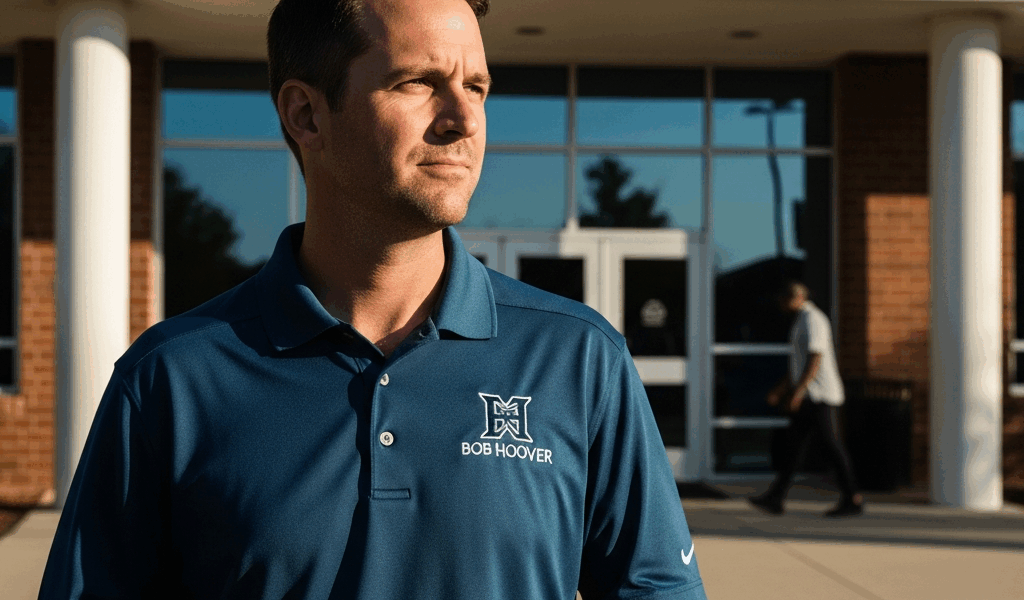
What came next was the Bob Hoover Academy. And depending on how you measure value, it might be the most important thing he’s ever done with an airplane.
The Bob Hoover Academy — His Second Act
Bob Hoover was, by the account of essentially anyone who watched him fly, the greatest airshow pilot who ever lived. He flew a Shrike Commander with one engine shut down through maneuvers that had no business being physically possible. He poured iced tea while inverted. He flew chase for Chuck Yeager’s sound barrier flight. He was also Sean Tucker’s idol, mentor, and eventually friend — Tucker spoke at Hoover’s funeral in 2016 and described him as the reason he stayed in aviation after that early crash.
But what is the Bob Hoover Academy? In essence, it’s a 501(c)(3) nonprofit based in Salinas, California — Tucker’s hometown — that uses actual flight training as an intervention tool for at-risk youth. But it’s much more than that description suggests. Not aviation education in the abstract. Not a program explaining aerodynamics with paper models. Actual flight training, in actual aircraft, with certified flight instructors including Tucker himself.
The program targets primarily low-income students aged 14 to 18 in the Salinas Valley — a region with persistent poverty, gang activity, and high school dropout rates running significantly above California’s already-troubled average. The pitch to students isn’t “aviation is cool.” It’s closer to: aviation demands discipline, mathematics, spatial reasoning, and decision-making under pressure. Transferable skills. Also — yes, you will actually fly an airplane.
Since the academy’s expansion under Tucker’s leadership — he became the public face and primary fundraiser around 2021 — the organization has trained dozens of students who had never previously set foot in a general aviation aircraft. Several graduates have pursued professional pilot certificates. At least two have been accepted to aviation-focused college programs.
The aircraft in the program are Cessna 172s — the standard 172S model, equipped with Garmin G1000 glass cockpit panels, leased at rates the nonprofit negotiates with local FBOs at Salinas Municipal Airport, KSNS. Not glamorous. A 180-horsepower Lycoming O-360 instead of a 350-horsepower aerobatic engine. A cruise speed of about 122 knots instead of 200-plus. No smoke system, no crowd line, no PA commentary.
Tucker addresses this contrast directly in interviews. He describes flying the Challenger III as an act of individual excellence — something pursued for himself that happened to entertain people. The academy work, by contrast, is collaborative and directional in ways that solo aerobatic performance never was. One student who completes a first solo flight represents a change in what that student believes is possible for themselves. An aerobatic routine at an airshow represents something closer to a beautiful dead end — a performance that doesn’t propagate forward into anything except the next performance.
That’s a somewhat harsh self-assessment from someone who spent 40 years doing the thing he’s now characterizing as a dead end. Apparently Tucker arrived at this framing after the pandemic losses forced a harder interrogation of what the saving and the work had actually been for. The answer he landed on: it was for this. The youth program. The thing he’s doing now in Salinas, at a regional airport, in a 172, with a 16-year-old working through a checklist for the first time.
The academy still needs funding. Tucker still spends significant time doing speaking engagements and media appearances to raise visibility. He still flies — aerobatic demonstration flights for donors and students rather than competitive performances. He still holds the world records. The Challenger III is still in the Smithsonian.
It just required him to find something the Oracle years couldn’t do by themselves.
The story of Sean Tucker isn’t a clean retirement narrative. It’s the story of a pilot who nearly died learning his craft, spent 40 years mastering it publicly — in front of 75,000 people at a time — got financially wiped out by a once-in-a-century pandemic at the single worst moment, and came back doing something harder to photograph but more permanently useful. Airshow fans who remember the Oracle years and wonder what happened to him have their answer. He’s in Salinas. Teaching kids to fly.


Stay in the loop
Get the latest airshow spectacle updates delivered to your inbox.