“`html
The Salary Range for Professional Airshow Announcers
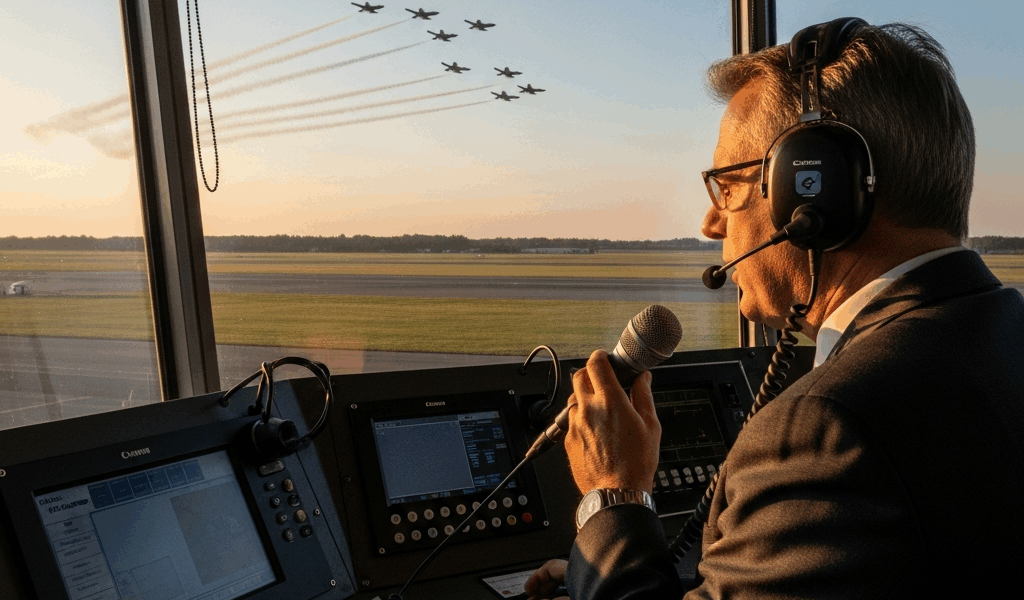
You’ve probably searched why air boss announcers earn more than pilots and hit nothing but vague forum posts with zero hard numbers. I spent time around the airshow circuit talking to event organizers, military public affairs officers, and working announcers — and the actual compensation picture is far more interesting than anyone publishes.
Here’s what the numbers actually look like.
At the regional and freelance level, announcers working smaller fly-ins and county airshows typically charge between $1,500 and $4,000 per event. A two-day weekend show might come in at $2,500 flat, maybe $3,200 if travel and lodging are included as separate line items. These are working announcers — competent, experienced — but not the names people know.
Jump to major civilian airshows — EAA AirVenture Oshkosh, Sun ‘n Fun, the Dayton Air Show — and things shift dramatically. Top-tier announcers contracted for those events pull between $8,000 and $15,000 for the engagement. Some negotiate multi-year deals that bundle consulting, script development, and on-site presence into packages running closer to $20,000 per event week.
Then there’s the military and federal side. The Air Force, Navy, and Army contract civilian announcers for demonstration teams and base open houses. These roles sometimes come with annual contract structures ranging from $60,000 to $90,000 when you factor in guaranteed event minimums, travel stipends, and appearance fees. A civilian announcer supporting a Thunderbirds or Blue Angels season — traveling to 50-plus shows annually — is looking at substantial total compensation once everything gets tallied.
Stack it all together: a top-tier announcer working 25 to 35 events per year at blended rates between $5,000 and $12,000 per engagement can realistically gross $120,000 to $200,000 annually. And that’s before sponsorship income, consulting fees, or any media work.
Why Top Announcers Command Higher Pay Than Military Pilots
This is where it gets genuinely counterintuitive — though I should mention upfront that military pilots have benefits, pension structures, housing allowances, and healthcare packages civilian announcers simply don’t get. An O-4 Major pulling full military compensation with BAH and retirement contributions is looking at total compensation well above $100,000. So this isn’t a clean “announcers win” scenario.
But in raw cash terms, for contracted airshow work specifically, announcers come out ahead. Here’s why.
Scarcity drives everything. There are roughly 300 to 400 professional civilian airshow performers in North America. The pool of truly polished, crowd-ready, technically literate airshow announcers — people who can explain a split-S maneuver to 80,000 people while managing crowd flow and safety announcements simultaneously — is probably fewer than 75 people nationwide. The Blue Angels demonstration team has six performing pilots. The entire country might have 30 announcers capable of working a Tier 1 airshow without a rehearsal week.
I attended a regional show back in 2019 and got frustrated by the lack of quality control. Started paying closer attention to what announcers actually do during a performance. They’re not just narrating — they’re timing crowd attention, covering performer delays without creating panic, managing audio cues from a live tech crew, and reading weather-related schedule changes in real time without any script for the unplanned parts. That skill set is genuinely rare.
Portability is the second driver. A military demonstration pilot is assigned to a single unit, flies a single platform, works within a defined seasonal schedule. A civilian announcer with a strong reputation can work 35 shows across three countries in a single year. Their earning window is compressed — April through October, roughly — but the volume potential is uncapped in a way military assignments simply aren’t.
Market leverage is the third factor. When an airshow sells sponsorships, the announcer is the vehicle for sponsor mentions, on-air reads, and brand integration. A headliner announcer can negotiate a piece of sponsorship revenue or a higher base rate because they directly amplify sponsor ROI. Pilots don’t do that — nobody is paying extra for a pilot to mention their brand over the radio at 400 knots.
The Most In-Demand Announcers in the Airshow Circuit
Probably should have opened with this, honestly — it’s where the career reality gets concrete.
Rob Reider is among the most recognizable names working civilian airshows in North America. He’s worked EAA AirVenture multiple times and has a booking schedule spanning both military and civilian events. His reputation rests on technical accuracy — pilots and crew chiefs trust him to describe aircraft systems correctly — combined with a broadcaster’s instinct for managing audience energy.
Sean Tucker, while primarily known as a performer, has also worked in announcing and commentary roles. This illustrates the crossover between performer credibility and announcer value. When someone with his background steps to the microphone, the fee structure reflects his name recognition immediately.
On the military side, civilian contractors embedded with teams like the USAF Thunderbirds or Navy Blue Angels develop a specialty niche. These individuals are often former military — which gives them the technical vocabulary and security clearance baseline required for military base appearances. Their combination of credentials — broadcast skill plus military background — makes them nearly irreplaceable for that specific market. The rates reflect it.
The pattern across top announcers is consistent: long tenure building relationships with show organizers, a distinctive style attendees remember, technical depth performers respect. Those three things together create a booking flywheel. Once you’re on it, the calendar fills itself.
How Announcers Build a Six-Figure Career
Success starts at the bottom of regional shows and grinds upward through reputation. The career trajectory of a successful airshow announcer follows a recognizable pattern — but it takes years and deliberate strategy.
Multi-event stacking is foundational. Early-career announcers accept lower fees to build a portfolio of named events. Working a dozen regional shows at $2,000 each isn’t lucrative, but it generates video proof-of-concept, relationships with performers, and familiarity with FAA airshow requirements. That portfolio becomes your leverage for larger bookings.
Sponsorship tie-ins are an underused income layer. Announcers who develop a professional media presence — a podcast, YouTube content, social following among aviation enthusiasts — become attractive to brands like Sporty’s Pilot Shop, Jeppesen, or aviation insurance providers seeking airshow audience exposure. A sponsorship deal with a mid-sized aviation brand might add $15,000 to $25,000 annually without requiring a single additional live event.
Consulting roles at major shows are the income ceiling-raiser. Large airshows with million-dollar production budgets hire experienced announcers not just to perform but to help design the show’s narrative arc, script performer introductions, and coordinate with the air boss on timing. Those consulting engagements, separate from the announcing fee, can add $5,000 to $10,000 per event on top of the performance contract.
The Catch — Job Security and Year-Round Income
None of this is a stable paycheck. Full stop.
Most airshow announcers are independent contractors — no employer-sponsored health insurance, no 401(k) match, no paid time off. The airshow season runs roughly April through mid-October in North America, call it 28 weeks — and weather cancellations, military budget freezes, event sponsors pulling funding can eliminate booked shows with 60 days’ notice. An announcer who budgeted 30 events might work 22. That gap gets absorbed entirely by the individual.
Compared to a military pilot with a guaranteed base salary, retirement at 20 years, full medical coverage, and housing assistance, the announcer’s raw gross numbers look impressive. The risk-adjusted comparison is genuinely closer than it appears. A military pilot retiring after 20 years with a pension worth $40,000 to $60,000 annually — plus VA benefits, GI Bill transfers, and civilian airline hiring preference — has a financial floor no freelance announcer can match.
The honest take is this: airshow announcing can be a high-earning career for the small percentage who reach Tier 1 status. For the majority working regional circuits, it’s a passion-driven side business or a second-career pursuit from aviation or broadcasting. The ceiling is real. So is the volatility. Anyone entering this field for the money alone will wash out — the ones who last do it because they genuinely love what happens when 100,000 people look up at the same sky.
“`n



Stay in the loop
Get the latest airshow spectacle updates delivered to your inbox.