

Six jets. Closing speeds approaching 1,000 miles per hour. Vertical separation measured in feet, not hundreds of feet. How do the Blue Angels, Thunderbirds, and other formation teams pull this off? The answer involves years of training, obsessive standardization, and a level of trust that most pilots never develop.
The Selection Pipeline Is Brutal
Before pilots learn to fly three feet apart, they survive brutally competitive selection:
Blue Angels: You must be a carrier-qualified Navy or Marine Corps tactical jet pilot with at least 1,250 flight hours. Roughly 30 apply every year. Two or three get picked. Current team members vote, and personality and team fit matter as much as stick-and-rudder skill.
Thunderbirds: Air Force fighter pilots need at least 1,000 hours, including 500 in high-performance tactical jets. Similar ratios apply.
Both teams select pilots who have already proven exceptional in combat squadrons. The demo team becomes their final tactical assignment.
The Training Takes Months
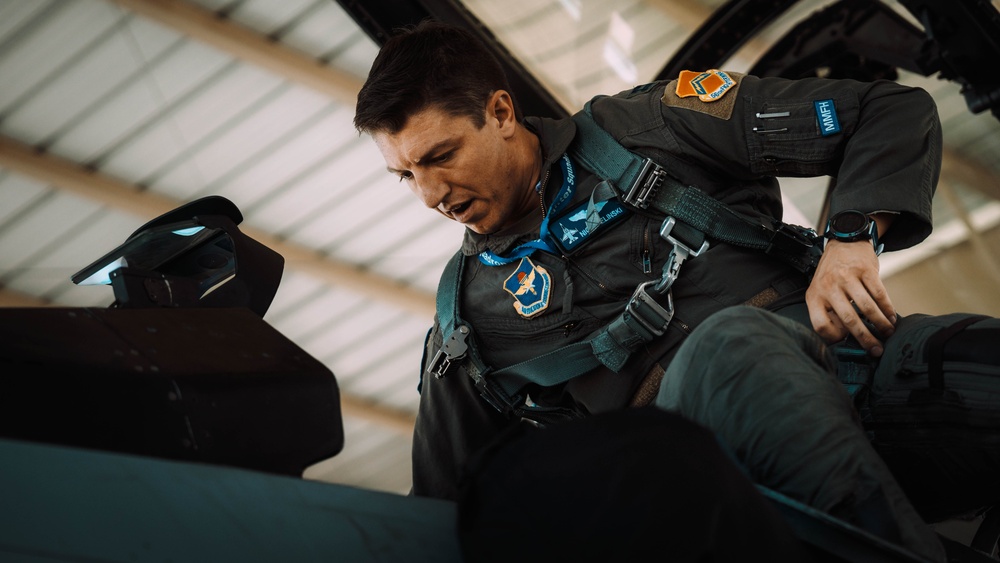
New pilots do not just strap in and join formation. The process takes months:
Weeks 1-4: Ground school, simulators, single-ship familiarization. Learning the demo profile from cockpit perspective.
Weeks 5-12: Two-ship formation, building to four-ship. Starting at “parade” distance of 10-plus feet before tightening progressively.
Weeks 13-20: Full team integration. Six-ship maneuvers, crossing passes, the complete demonstration sequence. Distances shrink to final demo spacing.
Week 21 onward: Readiness evaluation. A new pilot’s first public show only happens after team leadership certifies they are combat-ready.
How They Actually Stay Together
Formation flying at these distances relies on several principles that sound simple but are insanely hard to execute:
Visual reference points: Each pilot maintains position by aligning specific points on the lead aircraft with specific points on their own canopy. The Blue Angels diamond pilot flying slot number 2 might keep the tail of number 1 aligned with a specific rivet row visible through the HUD frame. Specific rivets. That is the level of precision.
Tiny corrections only: Large control inputs in tight formation are dangerous. Pilots make continuous micro-adjustments — throttle movements of fractions of an inch, stick deflections measured in millimeters.
Total trust in lead: The flight lead handles maneuvering the entire formation safely. Wingmen follow visual references, trusting that lead has evaluated terrain, altitude, and boundaries. Second-guessing lead in tight formation creates dangerous hesitation. Trust is not optional.
The Physics of Flying This Close
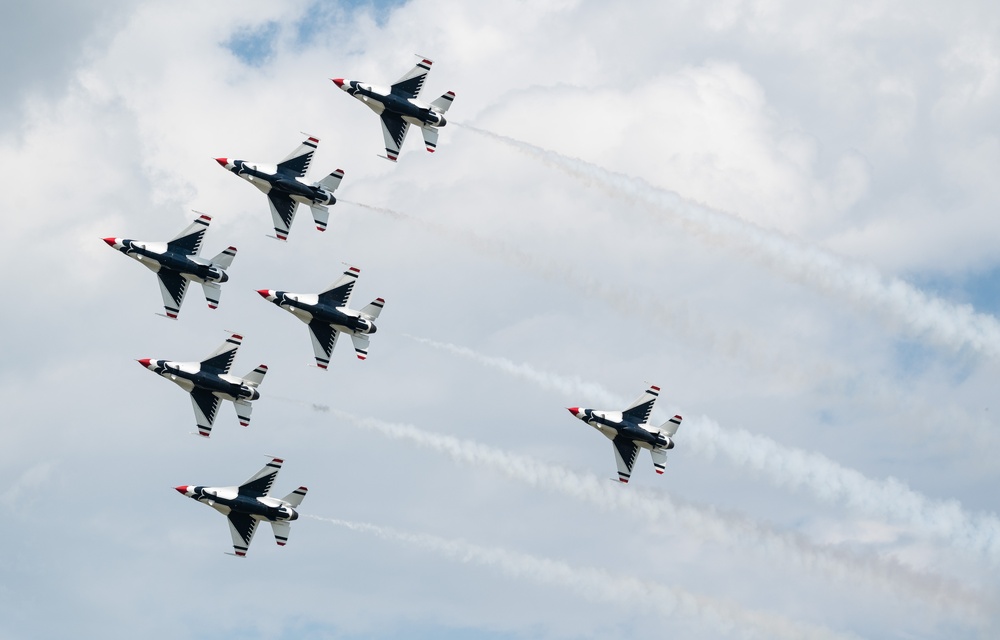
At three feet of separation, jets experience real aerodynamic interaction:
Wingtip vortices: Trailing aircraft hit turbulence from lead aircraft’s wingtips. Demo pilots learn to anticipate and correct for these disturbances instinctively.
Downwash: Aircraft flying below and behind others deal with altered airflow. The slot pilot in a diamond manages constant downwash effects that would unsettle most pilots.
Closure rates: During opposing passes, combined closure rates exceed 1,000 mph. The timing window for two groups to cross at show center is measured in hundredths of seconds. Miss by 0.3 seconds and the visual effect is ruined. They do not miss.
The Radio Silence That Surprises People
During Blue Angels performances, radios are largely silent. Pilots fly visual references while lead calls only essential commands. This is not showmanship — radio communication takes cognitive bandwidth needed for position-keeping. Fewer radio calls means more brainpower available for the flying that keeps everyone alive.
The Mental Game Is Everything
Physical skills plateau at this level. What separates demo pilots is mental resilience: maintaining perfect formation reference while knowing that a two-inch mistake could be fatal. It is controlled compartmentalization — acknowledging the risk while refusing to let it affect performance. Not everyone can do it, which is exactly why selection processes are so unforgiving.


Stay in the loop
Get the latest airshow spectacle updates delivered to your inbox.