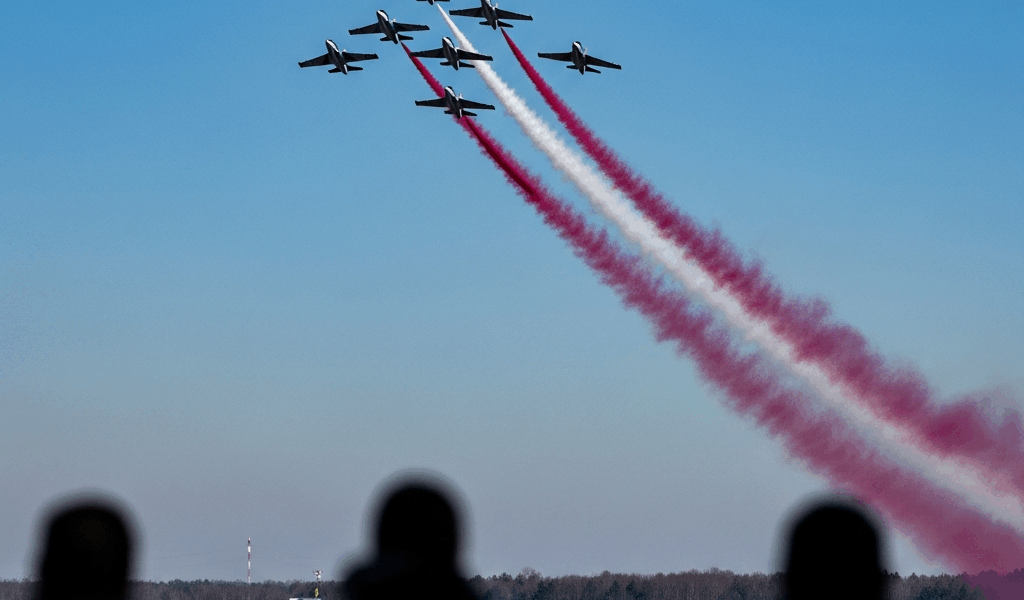
The RAF Red Arrows are stuck in Canada. Since August 3, the legendary aerobatic team has been grounded at Canadian Forces Base Goose Bay—weather won’t budge. Prolonged poor conditions across the northeastern Atlantic corridor have forced a postponement of their transatlantic crossing, but the delay has handed them an unexpected gift: time for critical engineering work on their aging Hawk T.1 fleet.
The nine-ship team wrapped up a seven-week North American tour that hit Maryland, New York, Maine, Michigan, and Wisconsin. They made their first-ever appearance at EAA AirVenture Oshkosh on July 24–26. On Independence Day, they joined the International Aerial Review, led by the U.S. Navy Blue Angels, with Canadian Forces Snowbirds also participating—a display marking 250 years of US independence. At the Great State of Maine Air Show in Brunswick, they performed multi-formation displays alongside the U.S. Navy Blue Angels and the U.S. Air Force F-35 Demonstration Team in its Maine debut.
Safety trumps the schedule now. The Hawk T.1 is a single-engine advanced trainer with no in-flight refueling capability—that means island-hopping across the Atlantic demands meticulous planning. Weather forecasters spotted rime ice in freezing fog, low ceilings, and peak Atlantic fog season bearing down on the Labrador Sea route to Greenland. “These conditions aren’t viable,” Squadron Leader Stuart Roberts, Red 10 for 2026, had emphasized in pre-deployment messaging.
The RAF’s official word: “Due to a prolonged period of forecasted poor weather in the north-eastern regions of Canada, the team is postponing its return Atlantic crossing until further notice. Safety is paramount to all decisions and will remain the only driver as to when the team continues the Atlantic trail.”
Instead of spinning wheels, the RAF is making the most of it. Post-tour engineering that would normally happen at RAF Waddington in Lincolnshire will now take place at Goose Bay. This move speeds up the return-to-service timeline once the weather breaks and keeps the team aligned with upcoming commitments. Supporting personnel have taken mandated mid-season leave back home in the UK—a benefit built into the deployment schedule specifically to handle weather delays like this.
The stakes are high. The Hawk T.1 fleet—the backbone of RAF aerobatic display since 1965—is racing toward mandatory retirement in March 2030. All of these airframes are at least 43 years old, with two already past 10,000 flight hours against a design maximum of 12,400. On May 23, 2026, the team announced they would display with seven jets rather than nine for most of this season—a strategic call to reduce pressure on aging airframes and give engineers some breathing room.
Before the tour launched, Wing Commander Sasha Nash, Officer Commanding the RAF Aerobatic Team, explained its importance: “This is a fantastic opportunity to display the best of British at significant events and occasions marking the 250th anniversary, alongside friends, allies and international counterparts.”
The Eastbourne International Airshow on August 14 is scheduled next on the calendar, pending weather clearance. The RAF is in contact with all contracted airshow organizers, and the schedule was deliberately padded to accommodate transatlantic hiccups. Once weather clears—likely within days—the final leg home awaits: Goose Bay to Greenland, then Iceland, then the push to Lincolnshire.
As of August 4, no confirmed return date has been announced. Keep an eye on Forces News and the Red Arrows’ official social channels for the all-clear.


Stay in the loop
Get the latest airshow spectacle updates delivered to your inbox.