“`html
What to Expect at Your First Military Airshow as a Spectator
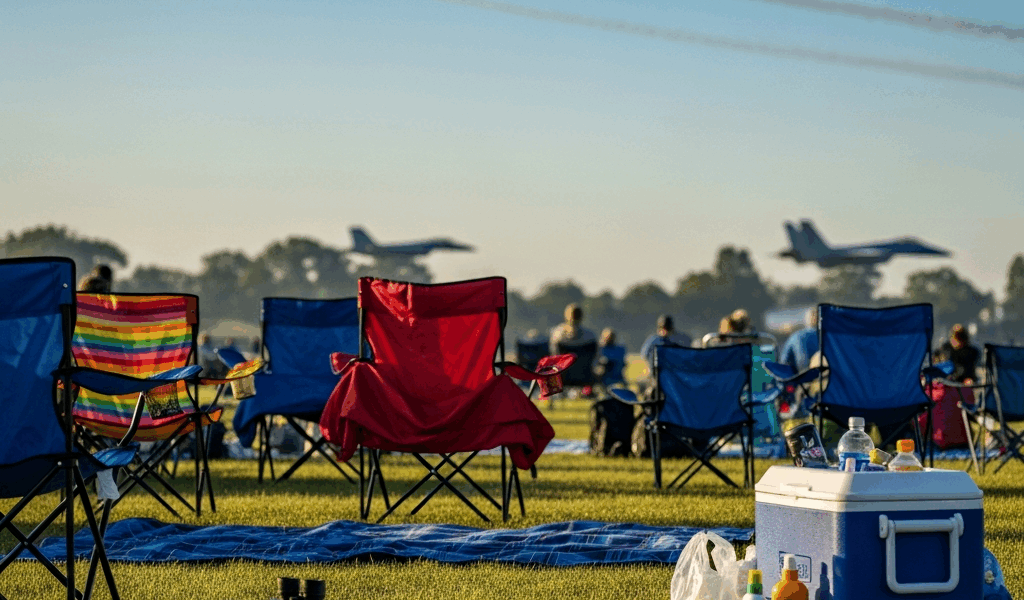
I showed up to my first military airshow at 11 AM with zero preparation. No earplugs. Sat in direct sun for six hours straight. Spent the whole afternoon squinting while jets screamed overhead at volumes that left my ears ringing for two days. That was fifteen years ago, and I made every rookie mistake you can imagine.
Since then? Dozens of airshows across the country — Andrews Air Force Base, smaller regional events, everywhere in between. I’ve learned what separates people who actually enjoy themselves from those who leave miserable and burnt out. Here’s what I wish someone had told me before that first visit.
Arrive Early to Understand the Layout and Airspace Rules
Most people roll up an hour before the flying starts. Don’t do that. Show up 2-3 hours early, especially for major events like the Thunderbirds or Blue Angels.
The best viewing spots disappear fast. I’m talking about spots where you can see the full flight path without contorting your neck or standing the entire time. You need a clear view to the north, south, and east — depending on that particular show’s flight pattern. Walk the whole spectator area before crowds hit. Get a feel for what’s actually there. Is there a hill? A viewing platform? Trees blocking sightlines?
You’ll see roped-off sections and restricted zones everywhere. These aren’t random. The flight line — where aircraft take off and land — stays completely off-limits for a reason. Air bosses coordinate the show through these barriers because planes perform low-altitude maneuvers, and mechanical failures happen. A pilot error could send an aircraft into the crowd. That sounds dramatic, but it’s exactly why those zones exist. Respect them. You’re not missing the best view — you’re avoiding a real hazard.
Grab that printed map when you arrive (most venues have digital versions now). Find the speaker locations. Knowing where announcements come from makes the play-by-play commentary actually useful when you’re trying to correlate it with what’s happening overhead.
Bring Hearing Protection and Sunscreen Before You Regret It
Military jets hit 140+ decibels at full throttle. That’s jackhammer territory. That’s a chainsaw three feet away from your ears. Your hearing will suffer without protection — this isn’t optional.
Foam earplugs beat earmuffs at airshows. Earmuffs create weird pressure that gets uncomfortable after hours, and they don’t seal properly when you’re moving through crowds. Get foam earplugs — the cheap pharmacy ones work fine. Howard Leight MAX or Mack’s Pillow Soft run about $0.20-0.40 per pair. Bring at least four sets. You’ll lose one, and you’ll adjust them throughout the day.
There’s this strange tough-guy thing at airshows where people skip hearing protection entirely. They convince themselves it won’t be that bad. Probably should have opened with this, honestly — noise-induced hearing loss is cumulative and permanent. One show might not cause obvious damage, but your hearing degrades over time. I have mild tinnitus now. I’m not saying airshows caused it entirely, but I definitely wasn’t careful enough in my twenties.
Sunscreen matters just as much. An airshow runs 5-8 hours. You’re in direct sun with almost no shade. Sun bounces off pavement and grass. Apply SPF 30+ broad-spectrum 15 minutes before arrival, then reapply every two hours. Most people use way too little — you need roughly a shot glass worth per application. Sunburn hits different when you’re already tired from noise and crowds.
Get a hat with a bill. Sunglasses labeled “100% UV” or “UV400.” A small backpack with water bottles (most shows allow your own now). These are necessities, not luxuries. The difference between going home happy or going home exhausted and hurting.
Learn Airshow Etiquette Around Photographers and VIP Sections
Unwritten rules matter at airshows. Break them, and security relocates you.
Photographers own their spots. These are people with serious telephoto lenses planted on tripods who arrived insanely early. Don’t stand in front of them. Don’t block their sightlines thinking you’ll just be there for one pass. Move aside. Yes, even if it’s less convenient. Photographers capture content shared across aviation communities — respect the mission.
VIP sections and military family areas stay cordoned off strictly. Security enforces boundaries hard. I’ve watched people get moved for simply standing too close to a rope. It’s not elitism — it’s logistics. Military families get limited access to these events. VIPs paid premium prices. Don’t test boundaries.
Standing vs. sitting creates its own rules: if you’re on the ground or bleachers, you own that immediate area. Others shouldn’t stand directly in front blocking your view. In open field areas, you’re part of a flowing crowd. Move if someone behind you is craning to see. Point out good spots to late arrivals. The airshow community skews friendly because everyone shares the same passion.
Photography etiquette matters too: if you’re filming, be aware of equipment. A telephoto lens sweeping left to right clips people in the face. Keep your phone camera down when you’re not actively recording. People want to watch the show, not stare at your screen.
The air boss manages everything through announcements and physical barriers. If they ask you to move — move. If a section closes due to weather or safety — understand they’re protecting everyone, not ruining your day.
Understand the Flight Schedule and Why Demos Run Late or Change
You’ll get a printed program listing every demonstration with estimated times. Treat those times as goals, not guarantees. Delays happen constantly, and first-timers get frustrated because they don’t understand why.
Weather is the biggest culprit. Low clouds, wind gusts, sudden rain — these ground aircraft instantly. The Thunderbirds flying in tight formation need visibility and stable conditions. Any risk and shows delay. I’ve waited 90 minutes between acts before. Bring a book. Bring entertainment. Bring someone to talk to.
Air traffic creates bottlenecks too. Military airshows happen near active airspace. Commercial flights get priority. Sometimes the show pauses while a commercial jet passes nearby — invisible to spectators but real to the air boss managing radio communications.
Acts get swapped. You expect the Blue Angels at 2 PM and get a static display of vintage aircraft instead because of fuel or maintenance issues. You’ll see the Blue Angels later, just not when you planned. That’s why the program exists — flip to the next section and find what’s actually happening now.
During downtime, walk around. Check out parked aircraft up close. Talk to other spectators — airshow crowds know their stuff and genuinely want to discuss it. Grab food (yes, overpriced). Hit the restroom when lines are short, not during breaks between acts.
Know What Military Aircraft Actually Look Like to Spot Them Correctly
The announcer calls out the F-16 demonstration. Something flies overhead and you’re completely lost. That normal for first-timers — confusion is expected.
Learn silhouettes instead. The F-16 has one tail fin and one engine. The F-18 (Blue Angels aircraft) has two engines, two tail fins, and a bulkier body. The F-22 Raptor shows a distinctive diamond shape from below. The Thunderbirds fly F-16s, so single tails plus aggressive maneuvers equals Thunderbirds.
Engine count saves you constantly. One engine outlet? Probably an F-16. Two engine outlets visible from below? Could be an F-18 or F-22. Listen to the announcer — they’ll tell you what’s coming. Your job is matching the sound and silhouette to the name.
Our site has detailed content on aircraft identification at airshows. Read that beforehand. Most common mistake: people confuse old trainer jets with modern fighters. The T-6 Texan II (training aircraft) gets mistaken for an F-16 all the time. Know the difference and you’ll impress enthusiasts around you.
Bring a notebook and pencil if you want to track what you saw. Honestly — just enjoy the experience your first time. Aircraft identification matters more on your second or third visit when you’re serious about this hobby. Your first time? Watch the show. Listen to narration. Let yourself be amazed by what these pilots do with multi-million-dollar machines traveling faster than sound.
Military airshows reward preparation. You’ll have a better day if you plan for crowds, protect your hearing and skin, respect the culture, understand scheduling realities, and arrive with realistic expectations. Show up early. Bring the right gear. Respect the unwritten rules. You’ll leave wanting to go back.
“`

Stay in the loop
Get the latest airshow spectacle updates delivered to your inbox.