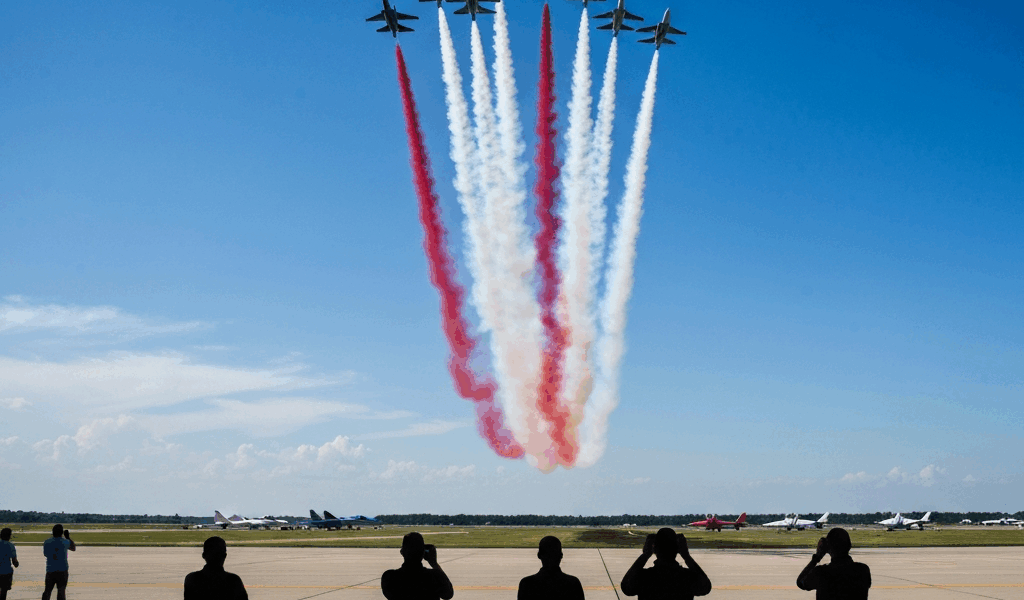
The Canadian Forces Snowbirds are heading into what could be their final season flying the CT-114 Tutor. Now, alumni from the legendary 431 Air Demonstration Squadron are making a push for something concrete—a scaled-back formation that would keep the team in the air while the RCAF waits for new aircraft.
LCol (Ret’d) Darryl Shyiak chairs the Snowbirds Alumni Association and once led the team himself. He’s been driving the proposal with real details. The alumni aren’t just asking the government to keep things as they are. Instead, they’re proposing to shrink the nine-aircraft formation, bring in industry technicians to handle maintenance, and free up current military personnel to work with other RCAF squadrons during the shift to the CT-157 Siskin II.
“We believe that there are some practical solutions where the Snowbirds would reduce the number of aircraft they fly, and that would allow them to continue to maintain that specialized expertise that the pilots have conducting the show,” Shyiak said. “We also suggested that consideration be given to partnering with industry, which could provide technicians. So many of the technicians currently on the team could be freed up to go to other operational squadrons throughout the Air Force.”
Why Scaling Matters—and Why Now
Defence Minister David McGuinty announced the grounding on May 19 at 15 Wing Moose Jaw, Saskatchewan. Show operations will stop after the 2026 season and won’t resume until the early 2030s. The government cited airframe certification concerns—even though it had just spent $31.2 million on a modernization program that was cut short after only 13 of the planned 20 CT-114 Tutors were upgraded. That modernization included new avionics, navigation systems, and flight data recorders, done through a partnership between L3Harris and IMP Aerospace & Defence.
The contradiction stings. The government invested heavily to keep Tutors flying until 2030, then grounded them three years early. LCol (Ret’d) Maryse Carmichael, the first woman to fly with the Snowbirds and a former squadron commander, said the spending pattern was indefensible from a taxpayer perspective.
The alumni proposal avoids the certification argument altogether. By flying fewer aircraft—pulling back from the signature nine-plane Big Goose formation rather than canceling shows entirely—the team would hold onto its expertise while cutting technical and operational strain. The RAF Red Arrows have done something similar, adjusting formation sizes during aircraft transitions without shutting down their display program.
The Expertise Problem
LCol (Ret’d) Dan Dempsey used to command the Snowbirds. He laid out what’s driving the alumni push. “When you stop flying low level aerobatics, it’s something you have to work back up very, very carefully. I don’t know how the RCAF is going to be able to easily transition onto a new aircraft after four or five years – you’re literally going to be starting from scratch.”
This isn’t theoretical. Over 55 years, the Snowbirds have performed nearly 2,900 official shows in front of over 150 million spectators across North America. That experience matters—the precision of formation flying, the split-second timing of moves like the Philp Roll, the safety lessons built from decades of flying low-level aerobatics. Once that knowledge disappears, it’s gone.
The 2026 season—led by team lead Maj. Maciej Hatta—has 27 shows scheduled across Canada and the United States. The squadron’s final appearance in the Tutor jets is scheduled for California in October, though the RCAF has indicated the show may be subject to change so the Tutors can be retired at home. The Moose Jaw hometown show on July 11 sold out in minutes. This summer is the last chance to keep the expertise alive before the Siskin II arrives.
Defence Minister McGuinty said the RCAF would “continue supporting” air shows after the grounding. He didn’t say how. The alumni proposal gives him an answer: maintain capability, hold onto expertise, smooth the transition, and hand Canadian decision-makers a real alternative to an unprecedented multi-year shutdown of the nation’s most visible military symbol.


Stay in the loop
Get the latest airshow spectacle updates delivered to your inbox.