
The Canadian Forces Snowbirds staged their final hometown show in Moose Jaw, Saskatchewan on Saturday, July 12. It was an emotional milestone for the 431 Air Demonstration Squadron, which has operated continuously from 15 Wing Moose Jaw for 55 years. Come October 2027, the aging CT-114 Tutor fleet will be grounded until replacement aircraft arrive in the early 2030s—but supporters aren’t going quietly. A grassroots “Keep Them Flying” campaign has already delivered over 25,000 postcards to Parliament Hill, urging the federal government to maintain operations during the transition.
Tickets for Saturday’s drive-in style show sold out in minutes. Spectators lined their vehicles along the taxiway ahead of the noon gate opening. The Canadian Forces SkyHawks parachute demonstration team performed first, then the Snowbirds took the sky at 1 p.m. The format felt intimate—this wasn’t a sprawling multi-performer air show, but rather a homecoming for an institution woven into Moose Jaw’s identity since their inaugural performance on July 11, 1971, exactly 55 years prior.
Defence Minister David McGuinty announced the extended grounding on May 19, visiting 15 Wing to explain the decision. Engineering challenges with the CT-114s—despite a $31.2 million life-extension program over five years—forced the retirement timeline acceleration. “It’s about preserving a proud Canadian tradition, but it’s also about preparing for the future,” McGuinty said. Canada’s transition to the Pilatus PC-21, designated the CT-157 Siskin II, represents “one of the most significant investments in military aviation training in history.”
RCAF Commander LGen Jamie Speiser-Blanchet didn’t shy away from the emotional reality. “This is a significant moment,” she stated, “an emotional one because of the extraordinary connection that this team has built with Canadians over more than five and a half decades.” Over their operational life, the Snowbirds have logged more than 2,700 displays for over 140 million spectators.
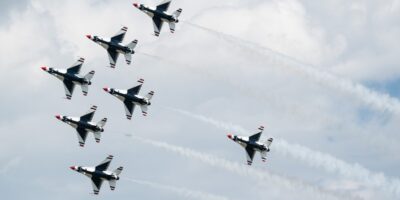
The team flies nine CT-114s in signature formation, including two solo aircraft, with two additional jets serving as backups, executing maneuvers including the iconic nine-abreast formation and downward bomb burst with just four feet of wingtip spacing. A 25-minute show showcases precision coordination from aircraft that entered service in 1967.
Ret. Lt.-Col. Darryl Shyiak, former Snowbirds commander, voiced the concern on many minds: “We were disappointed and quite sad to hear the announcement that the team is scheduled to shut down in October 2027. The potentially five years or more that the team won’t be out inspiring and connecting with Canadians will be a loss for all Canadians, coast to coast to coast.”
The “Keep Them Flying” campaign struck a chord. Launched by volunteers including designer Melissa McLean, it reflects genuine community support. “We wanted to see if there’s a way to keep them flying into 2030,” McLean said. “The ask is very simple—it could be a reduced formation, simplified shows—there’s got to be a way that can keep these Snowbirds in the sky until the new planes arrive.” A separate House of Commons petition has already exceeded the 500 signatures required for parliamentary consideration.
The Snowbirds will complete their remaining tour schedule through October 2027. Twenty-five confirmed appearances are already booked across Canadian provinces and three U.S. states. Defence officials have committed to maintaining the team’s base at Moose Jaw and rebuilding to full nine-aircraft strength once the PC-21s arrive in the early 2030s.


Stay in the loop
Get the latest airshow spectacle updates delivered to your inbox.