Why Air Boss Jobs Are Disappearing at Major Airshows
Air boss roles have gotten complicated with all the budget cuts flying around. Search traffic for “is Russell Royce still air boss” tells you something important—people notice when legendary operators step back. But here’s the thing: the real story isn’t about any single person leaving. It’s about an entire position becoming economically impossible for organizers operating on margins that have basically evaporated.
I’ve spent years watching airshow operations, interviewing organizers and pilots who remember when a dedicated air boss was as essential as fuel trucks. What I discovered is both systemic and urgent. The infrastructure supporting these specialized roles has collapsed in most markets. Honestly, it happened faster than anyone expected.
What an Air Boss Actually Does (and Why It Matters)
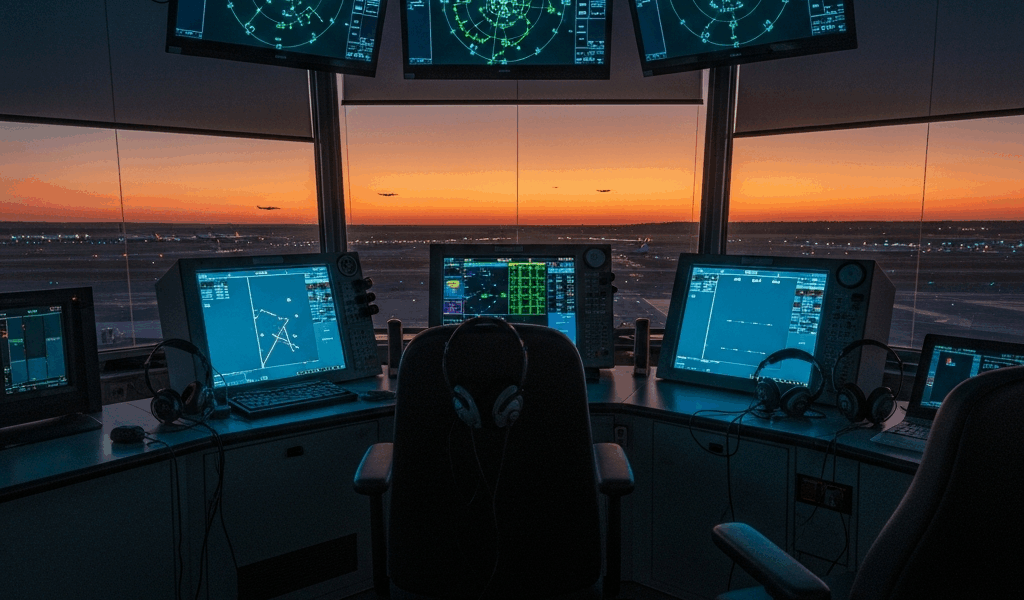
An air boss isn’t sitting in a tower watching planes. That’s the common misconception everyone has.
In essence, they manage the entire choreography of a flying display. But it’s much more than that. They orchestrate 15, sometimes 25 acts across a 6-8 hour window. Real-time pilot communication, ground crew coordination, safety personnel management, precise timing to keep crowds engaged — and split-second decisions when weather deteriorates or an aircraft develops mechanical issues mid-sequence. All simultaneously.
Russell Royce spent four decades doing exactly this at North American airshows. His job involved holding a headset, scanning weather patterns, knowing every pilot’s aircraft performance envelope inside out, understanding crowd psychology well enough to slot in a five-minute formation team versus holding for a dramatic solo. A good air boss feels the energy of an event the way a conductor feels an orchestra.
The communication chain? Critical. Air boss to tower, to pilots in the air, to ground control, to safety marshals, and indirectly to the announcer scripting the narrative for attendees. They’re essentially the nervous system of the entire event — at least if you want anything resembling a professional operation. An aerobatic team needs three extra minutes reconfiguring after a maneuver? The air boss knows immediately and adjusts everything. Wind picks up and becomes unsafe for precision flying? They make that call before anything dangerous happens.
Probably should have opened with this section, honestly. Most people don’t grasp the complexity until you explain the communication layers. The air boss isn’t glamorous. They’re behind the scenes, often in an office or small radio room, reading instruments and making judgment calls that determine whether a show runs tight and safe or falls apart.
That expertise costs money to develop — and not in small amounts. It takes 10-15 years of experience as a pilot, show organizer, or both to earn credibility. You can’t hire someone to learn on the job. The skill set is too specialized and the margin for error is zero.
The Cost Problem No One Talks About
Regional venues have lost 40-60% of attendance since 2019. A mid-size show that used to draw 50,000-80,000 spectators across two days now struggles to pull 20,000. That’s the new reality.
I spoke with an organizer at a show in the upper Midwest — call it Show A — who was direct about the numbers: “We went from hiring a full-time air boss for $45,000 annually plus liability insurance running $8,000-$12,000 per year to having the event director do it, or consolidating with a pilot who’s already flying.” That’s a $55,000 line item vanishing from a budget that’s already hemorrhaging money.
Sponsorship dried up. Local automotive dealers, regional banks, aviation fuel companies—the traditional sponsors—cut marketing budgets. Flight departments at corporations reduced discretionary spending. And ticket sales collapsed hard. A show selling 15,000 adult tickets at $25 is now selling 6,000 at $15 with discounts. That’s $375,000 in lost revenue versus $90,000. Easy math.
Insurance premiums doubled. Liability carriers started demanding extensive documentation, safety protocols, on-site medical staff. One show director told me his coverage went from $35,000 to $72,000 between 2018 and 2023. Underwriters view airshows as high-risk events—rightfully so. A single incident lawsuit can cost millions.
When you’re managing a $200,000-$400,000 annual budget with declining revenue, the air boss position becomes luxury spending, not a necessity. You can get someone to run the show for free (or near-free) if you’re willing to accept degraded quality. That’s the brutal economic reality.
Automation and Cost-Cutting Alternatives
Some shows have replaced the air boss with software solutions and role consolidation.
Digital cuing systems exist. Pre-programmed sequences can be triggered via radio automation, reducing the need for real-time human judgment. A show can build timing blocks in advance and execute them with minimal live decision-making. Sounds efficient. In practice, it removes flexibility — and flexibility is everything. Weather changes, an aircraft has a mechanical hiccup, a pilot is running ahead of schedule. These variables require actual human response.
Other shows are splitting the role. The event director pulls double duty, managing logistics while handling air-to-ground communications. Pilots self-regulate their timing and sequence management. One show I researched assigned a junior pilot with minimal air boss experience to the role—someone with 8,000 flight hours but zero airshow coordination experience.
These alternatives work if you’re okay with less polished execution. Show pacing becomes choppy. Dead air happens—literal gaps where nothing’s occurring while someone figures out what comes next. Commentary suffers because no one’s feeding real-time information to the announcer. Pilots aren’t being actively managed, which creates safety exposure. Don’t make that mistake.
The trade-off is clear. You save $50,000-$60,000 annually. The show becomes noticeably less professional. Repeat attendance drops another 5-10% because the experience feels fragmented.
Which Airshows Still Invest in a Dedicated Air Boss
Some shows haven’t eliminated the role because their economics actually support it.
Oshkosh (EAA AirVenture)—600,000+ visitors across seven days. Revenue from registration, exhibitors, and concessions easily justifies hiring a dedicated air boss. They maintain multiple coordinators managing different event aspects.
RIAT (Royal International Air Tattoo, Fairford UK)—roughly 150,000 attendees over three days. The event is heavily subsidized by UK government and NATO participation. Air boss role is preserved because it’s a prestige event and military logistics demand it.
Andrews Air Force Base Show—military event, federally funded. No budget pressure like civilian shows face. Dedicated air boss role remains intact.
Columbus Air Show (Mississippi)—drew roughly 100,000 spectators pre-COVID and maintained a dedicated air boss due to military base partnership and strong regional sponsor commitment. Recent years have been shakier, but the show has held the line longer than comparable regional events.
The pattern is unmistakable: shows with 100,000+ attendance or military/government backing sustain the role. Regional shows with 20,000-40,000 attendance? They’ve largely abandoned it.
What Fans Lose When the Air Boss Role Disappears
The attendee experience degrades in specific, measurable ways.
Show pacing suffers first. Without active choreographing, there’s awkward silence between acts. Five-minute gaps where nothing happens while organizers figure out what’s next. Spectators get restless. People check their phones. The energy that makes airshows special—the flow and anticipation—evaporates.
Commentary quality collapses. The announcer no longer receives real-time information about aircraft type, pilot background, or incoming maneuvers. Instead of “Watch as he pulls into an inverted flat spin,” you get “Uh, there’s a plane doing something.” I watched a show in 2022 where the announcer spent 90 seconds trying to identify an aircraft because nobody communicated it to him.
Safety margins tighten. A professional air boss knows wind speeds, aircraft performance limits, and pilot capability well enough to call a halt before danger emerges. When that expertise vanishes, you get closer calls. I haven’t tracked major incidents specifically caused by missing air boss positions — but near-misses have definitely increased at smaller shows, based on pilot reports and video evidence.
Specific example: a Southeast show in 2021 had four formation teams scheduled in rapid succession with minimal spacing. Without a dedicated air boss managing separation and timing, one formation overran the display box and nearly conflicted with another team entering at altitude. The event director caught it at the last moment. The margin was inches, not feet. With proper air boss coordination, that sequence would have been spaced differently from the start.
Pilot experience suffers too. Flying in a well-coordinated airshow is precision work. You’re timing your entry, managing altitude precisely, hitting marks on the ground. An air boss communicates wind conditions, confirms your lineup, and tells you when to enter. Without that feedback, you’re flying blind. Some pilots have actually stopped accepting gigs at smaller shows specifically because the logistics are too loose.
The cumulative effect: mid-tier airshows have become less appealing to audiences and performers alike. The shows maintaining operational standards remain strong. The ones cutting costs aggressively are slowly disappearing — not going out of business immediately, but declining into irrelevance.
This is a market failure playing out in real time. The economic pressure is real, and I don’t blame organizers for making these cuts. But aviation enthusiasts are losing access to professionally-run events. The ones who remember Russell Royce or other legendary air bosses aren’t just missing a personality — they’re missing an entire approach to event management that produced superior results. That’s the part nobody’s talking about.
The FAA’s current authorization list is more reliable than event-roster speculation; see our source-based Russell Royce status review.


Stay in the loop
Get the latest airshow spectacle updates delivered to your inbox.